We have enjoyed taking cooking classes while we travel. It seems like a nice way to learn about the local produce, cooking methods, and cuisine. It also nicely breaks up the monotony of eating restaurant food every day while travelling.
We have been to cooking class in Thailand, Italy, and Cambodia. These experiences are not exactly “Culinary Institute” caliber lessons. It would be more appropriate to consider them for tourists and the kitchen curious among us.
Today, we learned to prepare some traditional Greek dishes and we toured a farm that produced many of the menu items.
Our host for the day was Nikos who gave up his Athens-based job as a software engineer to work on the farm that his great grandfather built from the hillsides in Naxos.
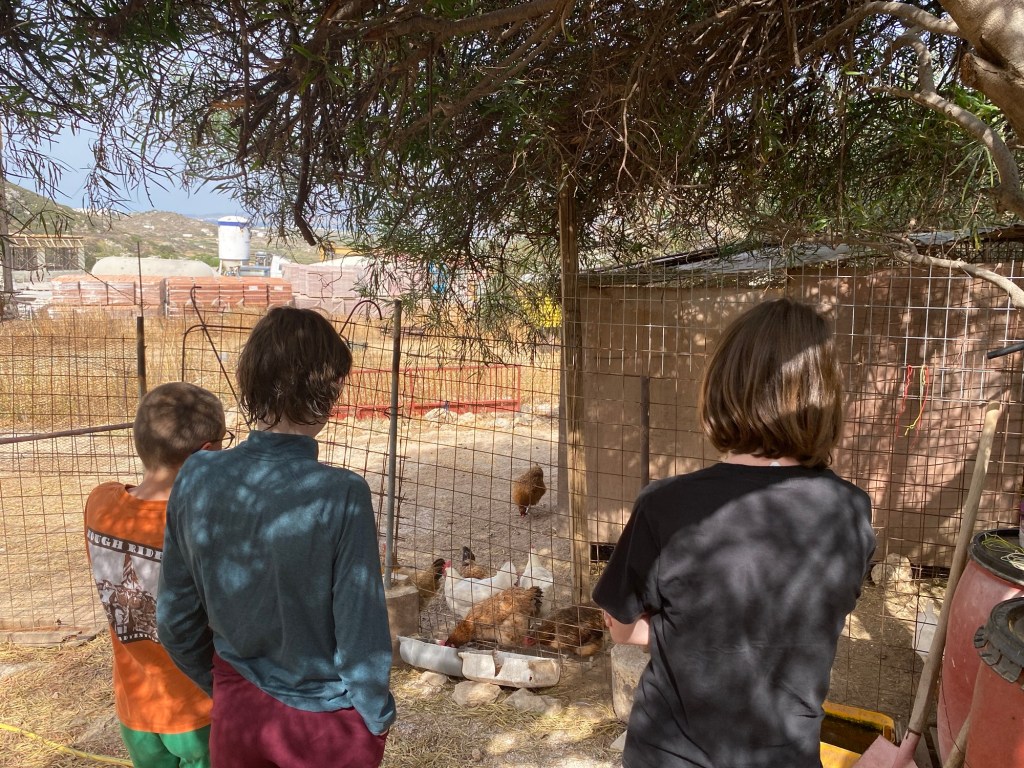
There are 40 chickens, roosters, and even a peacock or two residing there. We quickly learned that one of our Adventurers can make an incredibly realistic rooster sound.
At the bottom of this post you can learn whether rooster 1 or rooster 2 was real and which Adventurer is the mimic.
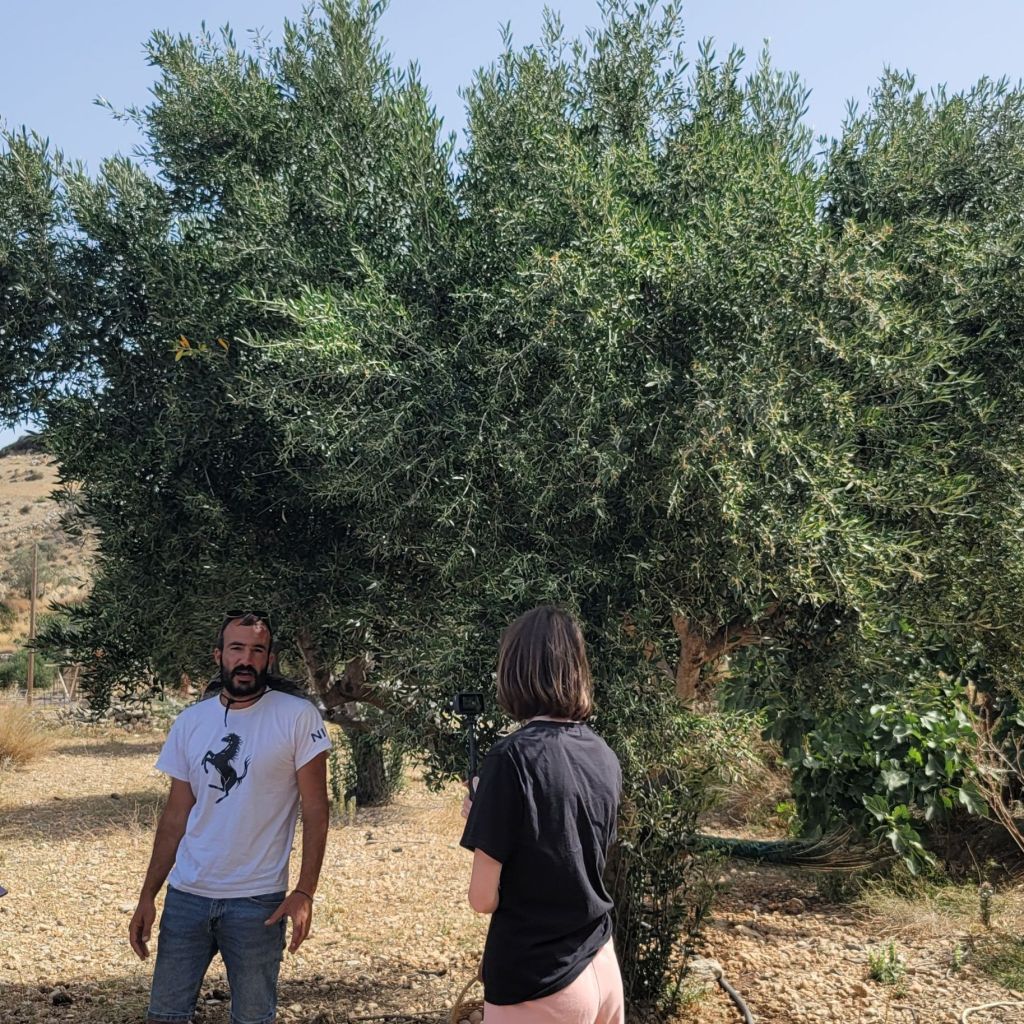
There are 50 olive trees planted by Nikos’ grandfather six decades ago. These Kalamata olives are harvested in October. Nikos was “very pleased” with the potential for this year’s harvest. They will create about 10 liters of oil from 20,000 olives from each tree. There are only 2 olive presses on the island, so there is some consideration about when to hire your harvester (tree shaker) and when to schedule your pressing.
Naxos is famous for their potatoes, which grow well in this climate. Nikos told us that the secret to the Naxian potato is the sea breezes, which hold nourishing salty water. The potatoes have 2 harvests, avoiding summer when growth is slow. They use the under-sized potatoes as the seedings for the next crop. Those that get storage are dusted with lime to prevent the growth of eyes.
These potatoes, when deep fried in olive oil, are like mashed potatoes inside the fried wedge and are delightful.
As we walked between the six terraces of the farm, we saw wild herbs growing everwhere.
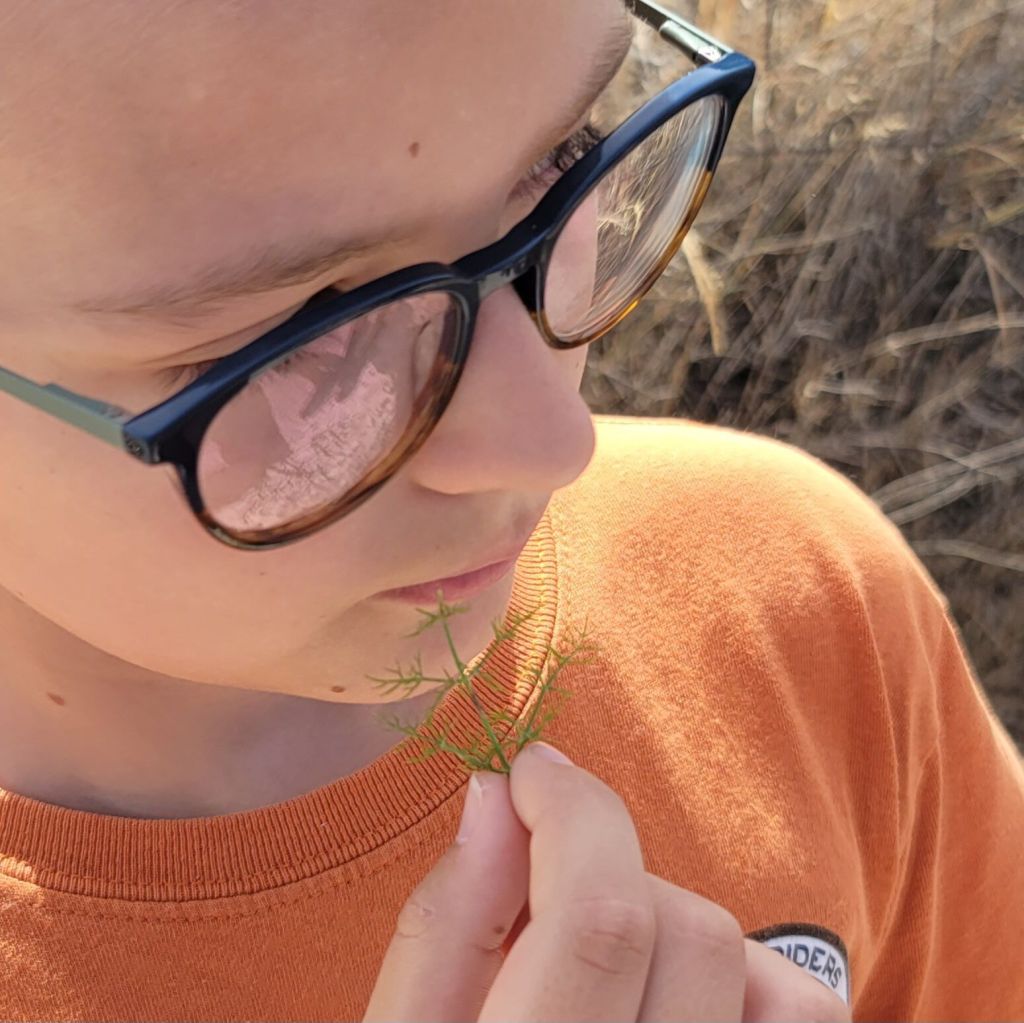
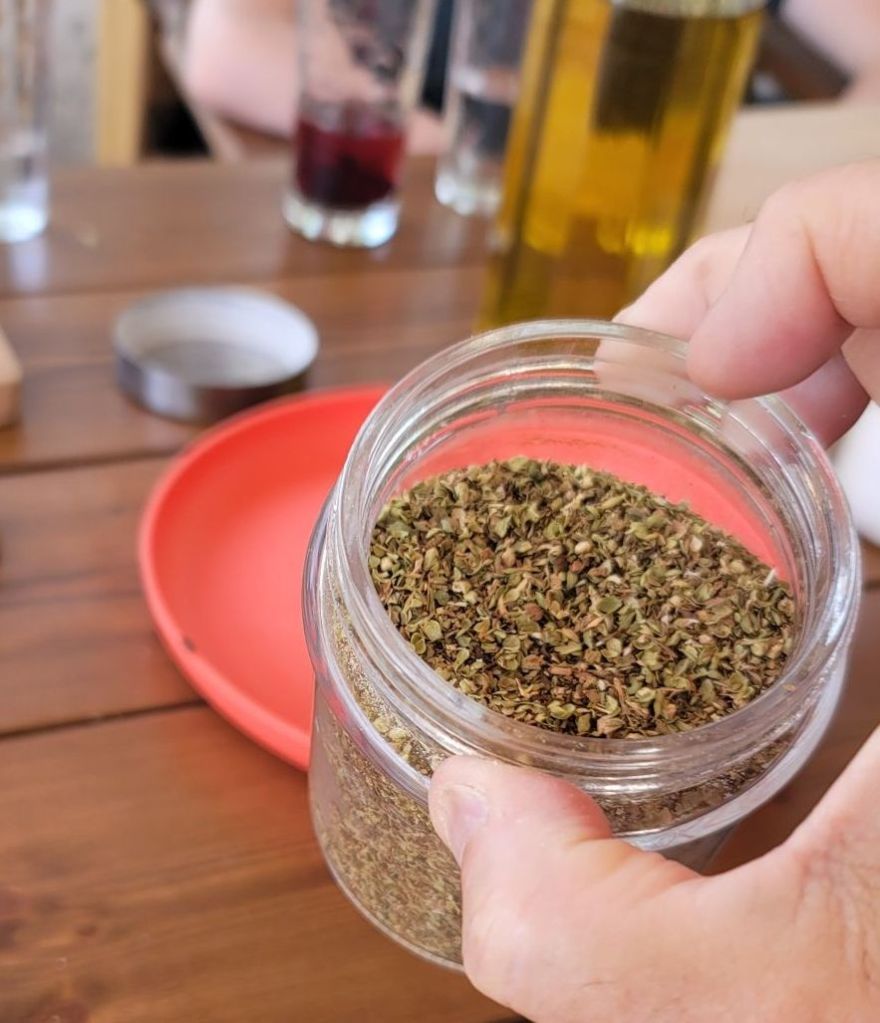
The oregano is dried and flaked. He has jars of these and we wonder why we don’t grow these in our garden. After all, our California climate has lots of similarities to Naxos and we should be able to succeed at growing something wild.

Naxos is also famous for their honey. The wild thyme grows purple flowers, and most of the best honey on the island derives from the nectar of this flower.

Another example of the similarities with California climate is that there are almond trees and citrus trees growing on the farm.

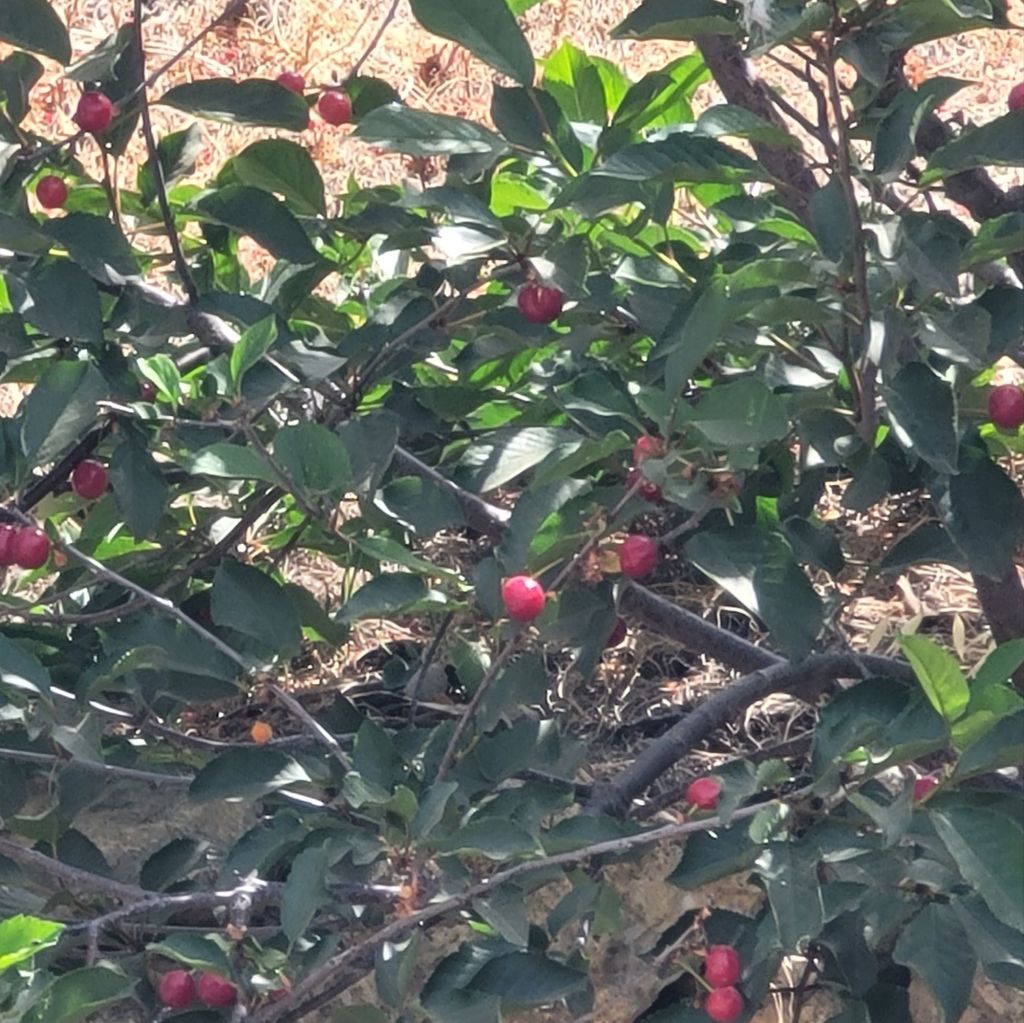

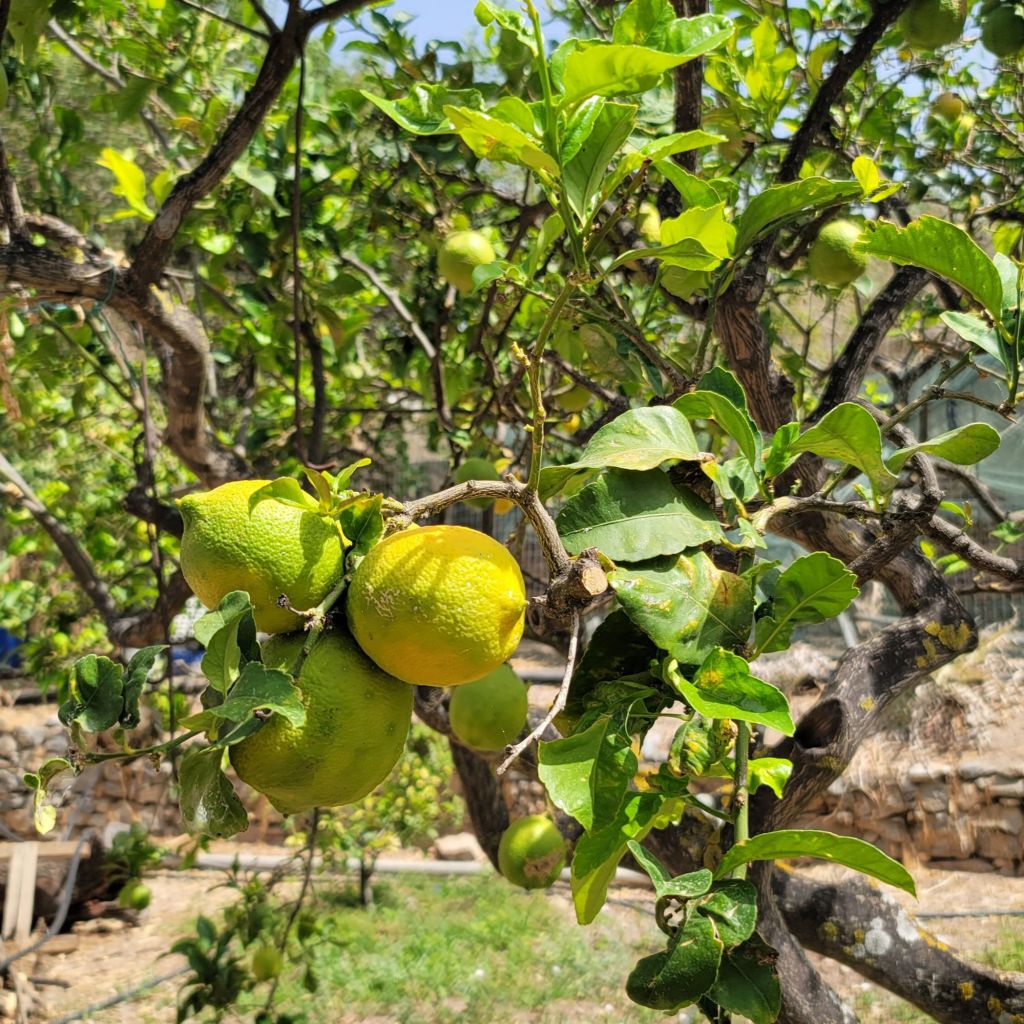
One tree was perfectly in season today and we all got to pick some fruit and taste it. Can you guess this fruit?

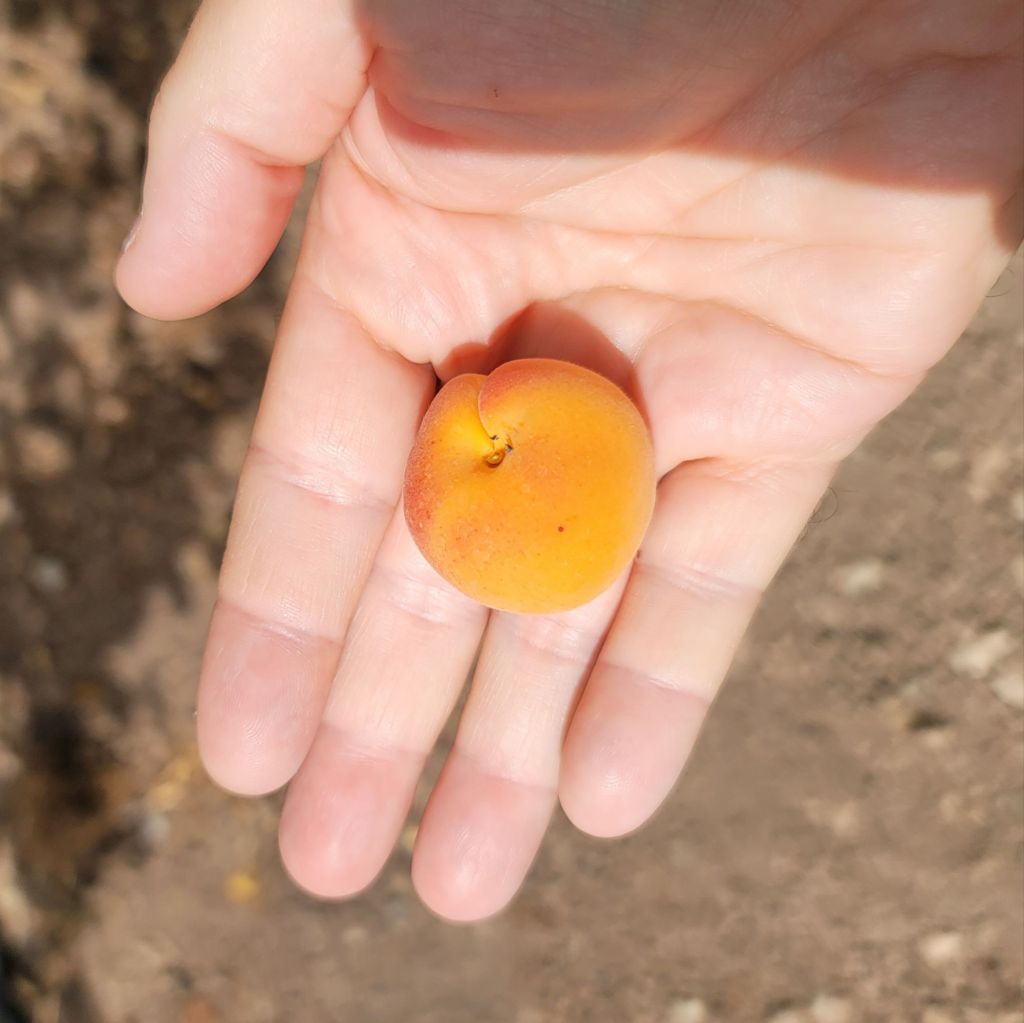
That’s right! They are apricots and they were delicious.
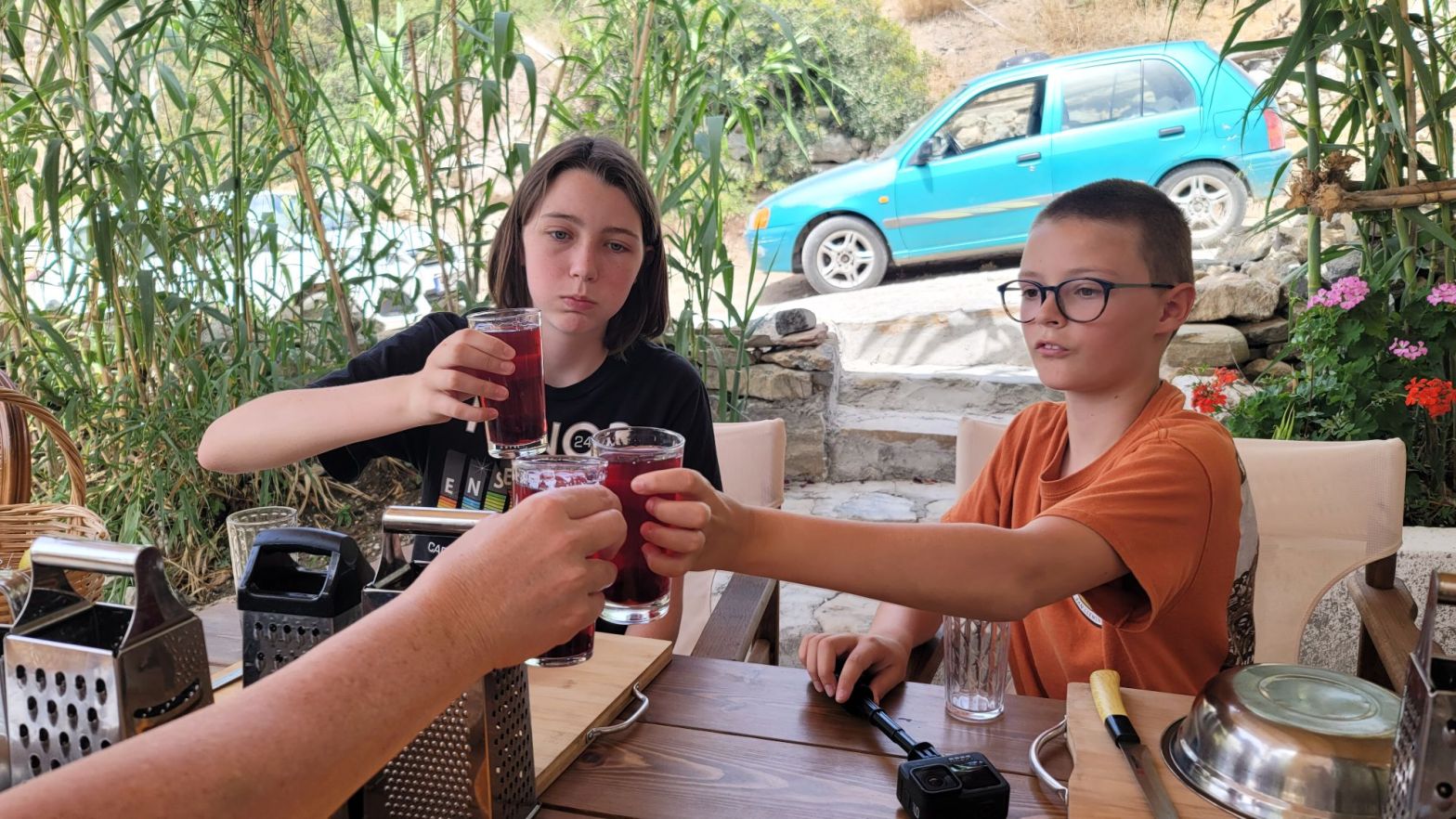
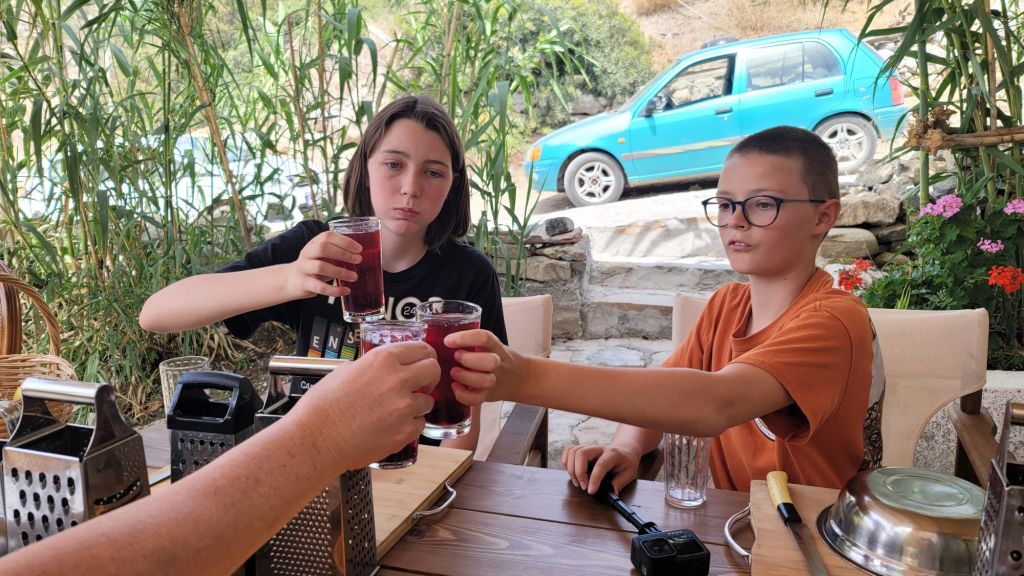
We completed our farm tour after about an hour in the mid-day sun. We were grateful to sit down and drink a glass of sour cherry juice. The soaked cherries at the bottom of the glass were a wonderful finish to the beverage.
Refreshed, we were tasked to chop vegetables: squash, potatoes, egg plant, and tomatoes for a main dish called briam. This was covered with tomato paste, water and oregano.
Niko’s father and uncle were there and they worked the oven and fry pans for us. We also shredded cucumbers for tzatziki sauce which we dipped the fried zucchini fritters into when we ate them.

The famous fried cheese wrapped with filo was also on the menu today. When they need it thin, we learned that Naxians get their filo dough the same way we do. From a frozen roll, which is carefully defrosted and carefully unrolled. Brian was pleased to see a native Greek struggle with unrolling good full sheets without wasting every other one in the process.
This dish was finished with Naxian honey and sprinkled with Sesame seeds. We tried three types of cheese today, but the pan fried Naxian yraviera cheese wasn’t to be beaten.

Did you guess the real rooster? See below for a final hint.
 5 Adventures Together