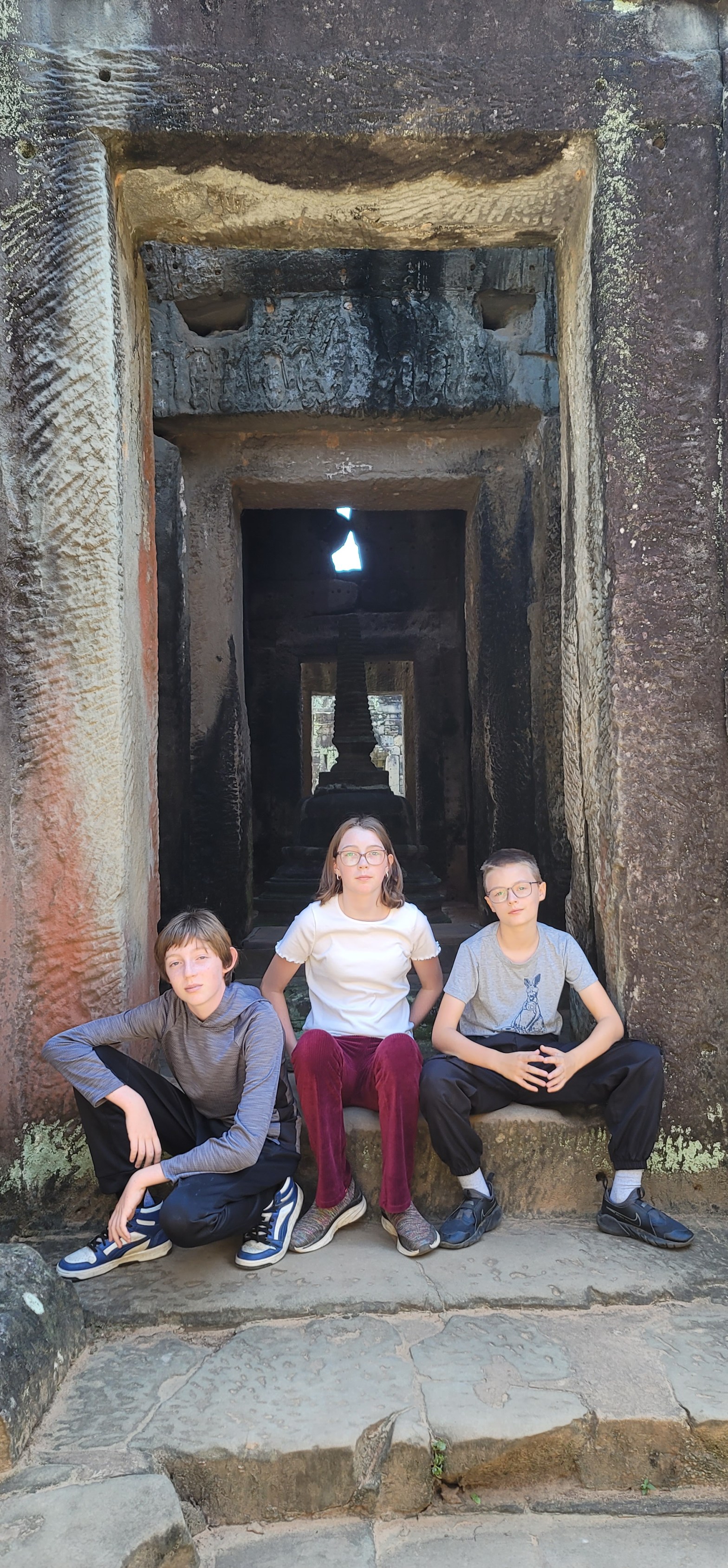
Day 4 was a return to the temples of Angkor. We saw the three largest temples on our first day, so today was for exploring a wider set of artistic styles and time periods.
We were falling asleep writing our Day 2 post (jet lag!) so we didn’t talk a lot about the significance of where we are but never fear, we can cover it today. Although Angkor Wat is the most famous and largest temple, it is only one of thousands of temples and structures that comprise the Angkor Archeological Park. The entire Park measures over 400 square meters, about the same size as the city of Detroit.
Per the UNESCO website: Angkor is one of the most important archaeological sites of Southeast Asia. Why? “For several centuries Angkor was the centre of the Khmer Kingdom. With impressive monuments, several different ancient urban plans and large water reservoirs, the site is a unique concentration of features testifying to an exceptional civilization.”
While Europe and Northern Africa were ‘enjoying’ the Byzantine Empire after the fall of Rome, Southeast Asia between the 9th-14th centuries was ruled by the Khmer Empire. In a similar manner, Khmer played a formative role in the political and cultural development of this region. The legacies of the Khmer civilization only remain in the archeology.
Our first stop today was at the gate to the Banyon Temple that we saw Saturday. The temple of many faces has, not surprisingly, a large face on the gate. The bridge leading to the gate has gods on one side and demons on the other. We chose to cross on the side of the gods.

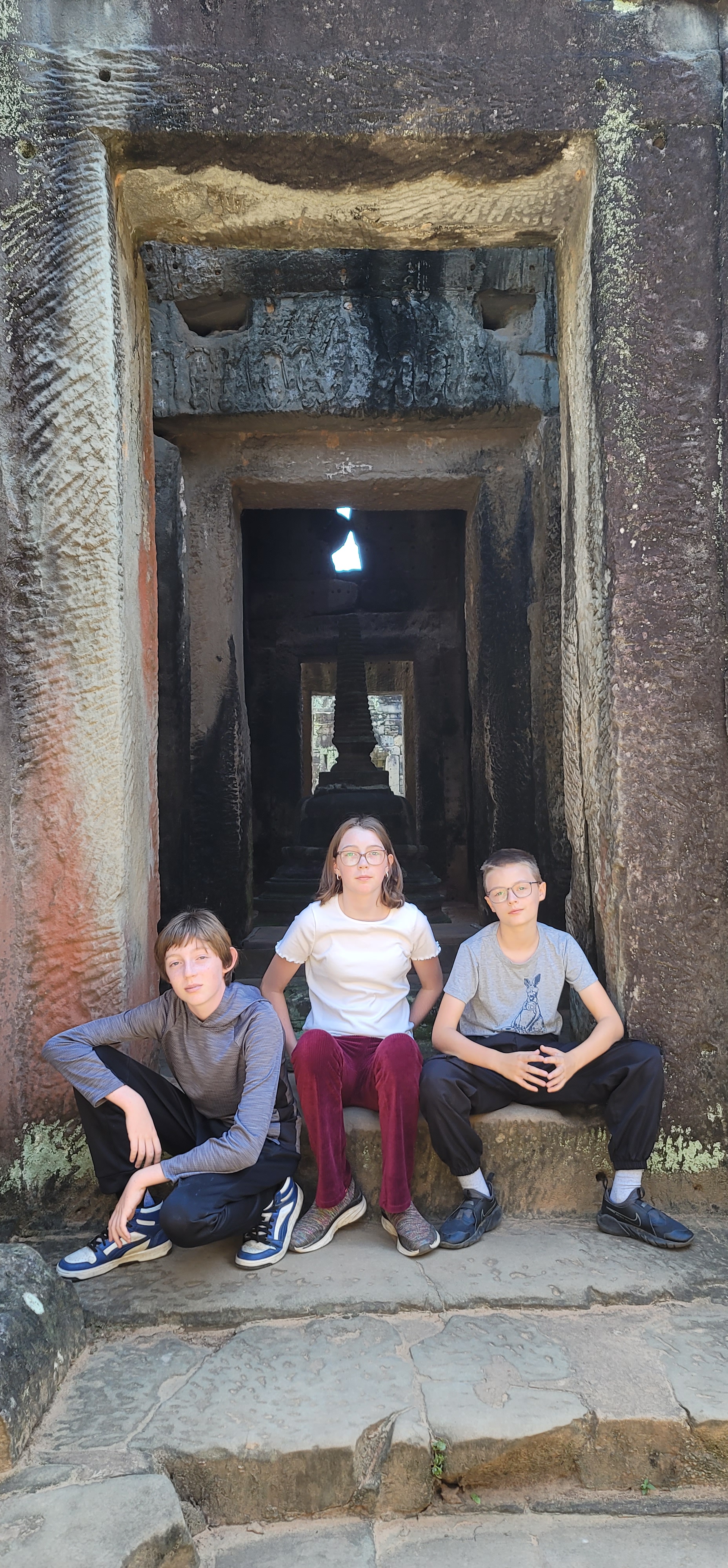
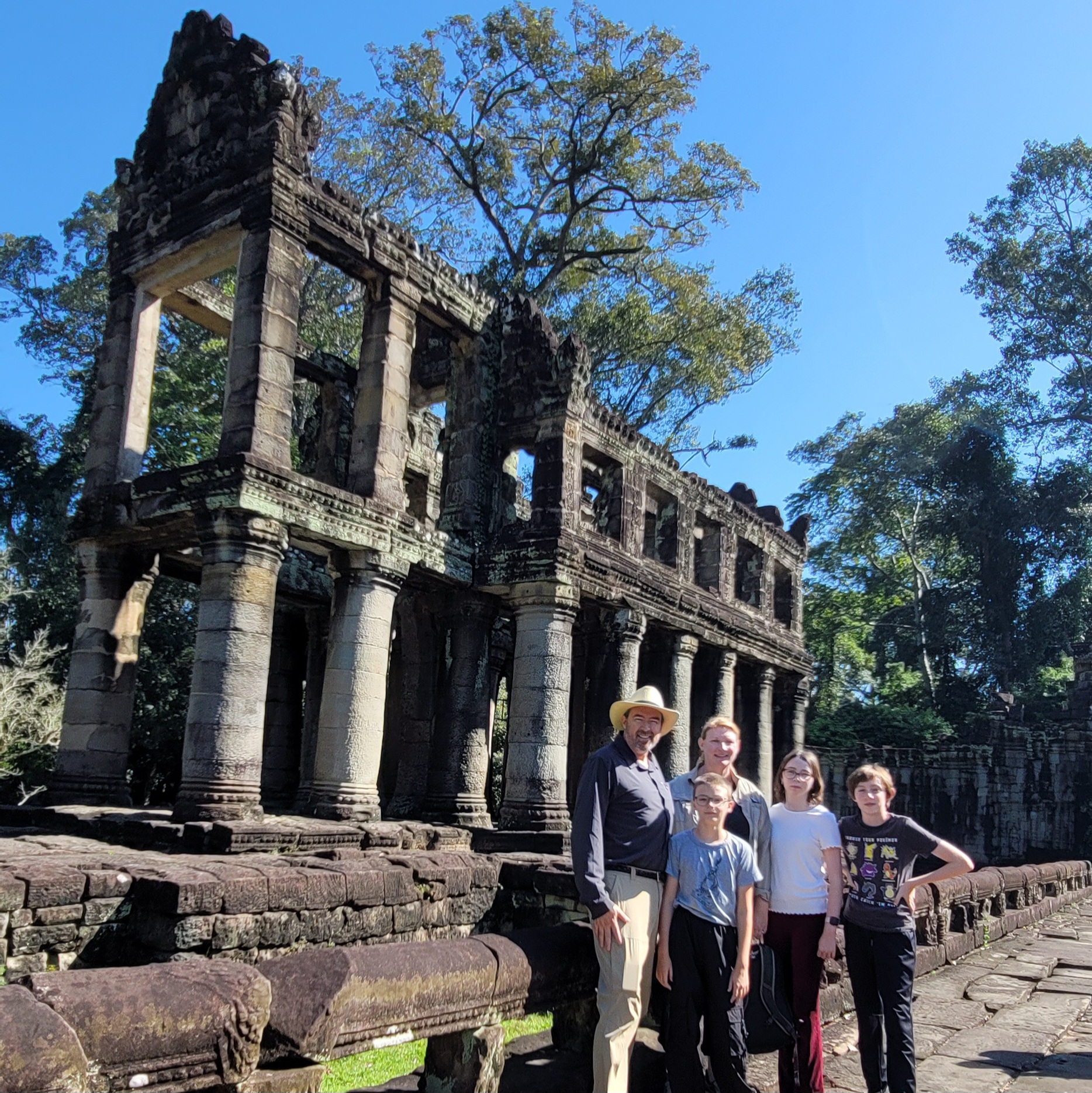
In total we saw five temples today but won’t take you through the history and details of each one. Preah Khan had many small rooms (more than 40 doorways to get from the front to the back) with rubble and nature dominant throughout but beautiful carvings tucked in a corner.
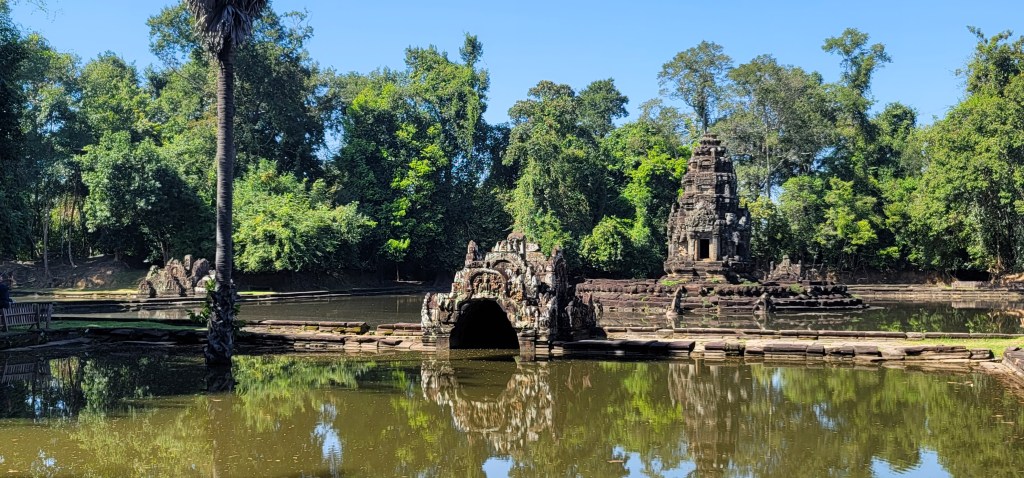
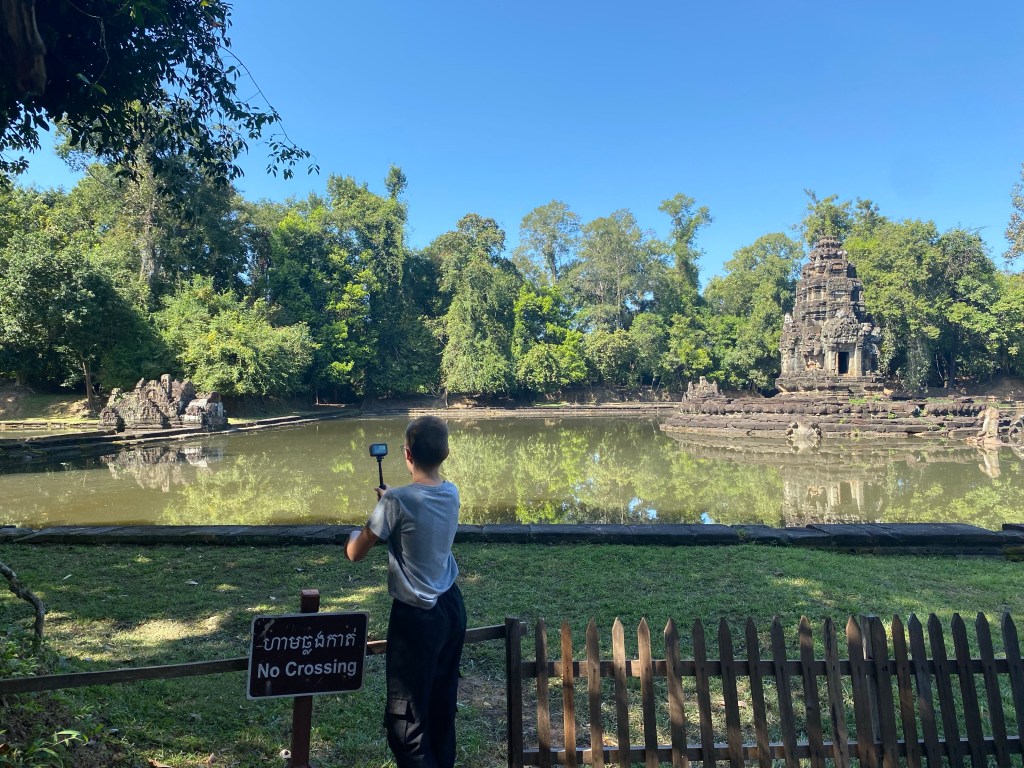
Neak Pean was a small structure in a pool surrounded by cleansing ponds representing the elements: earth, water, fire, and air. The temple itself is on an island in the middle of a large reservoir.
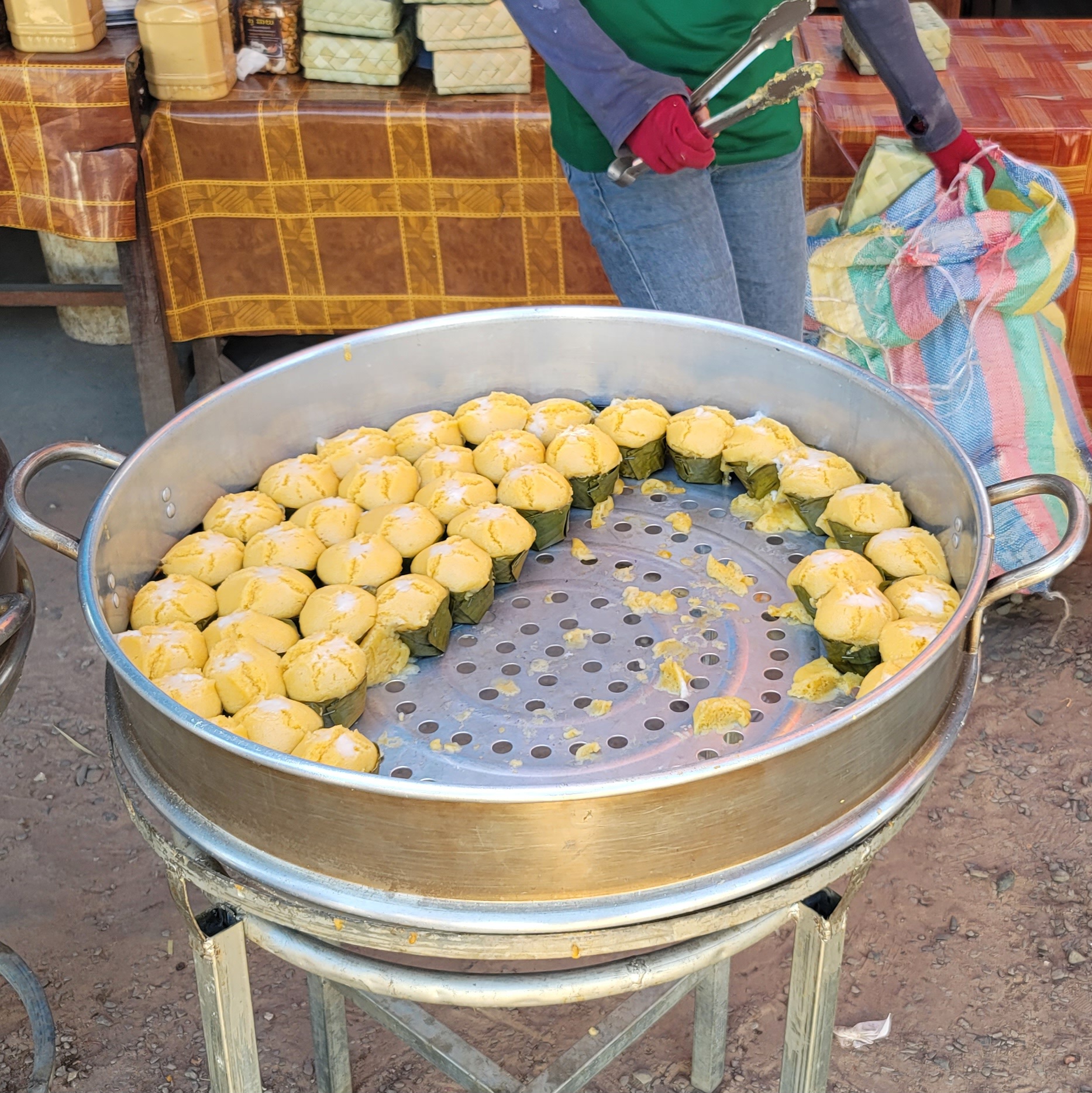
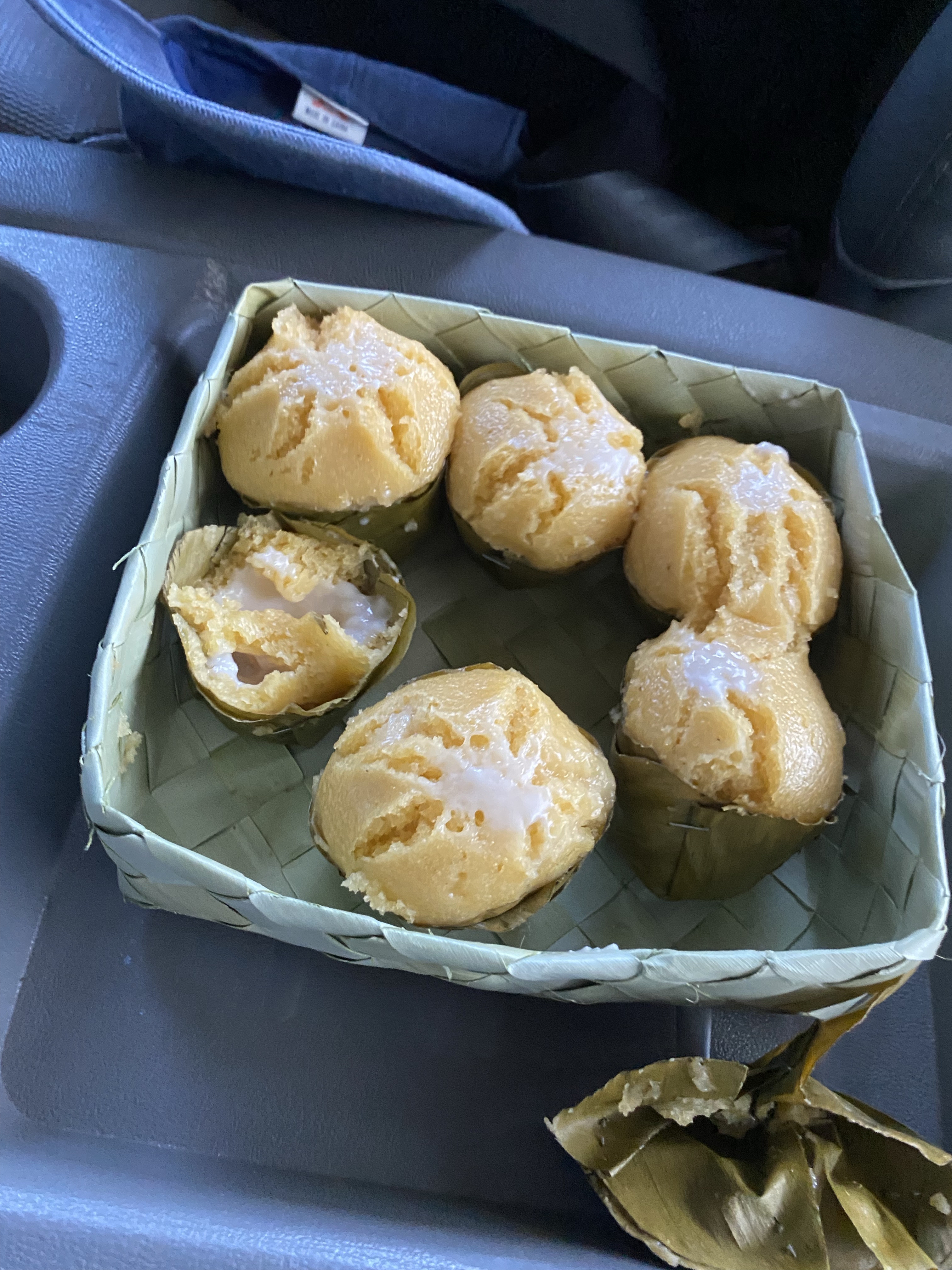
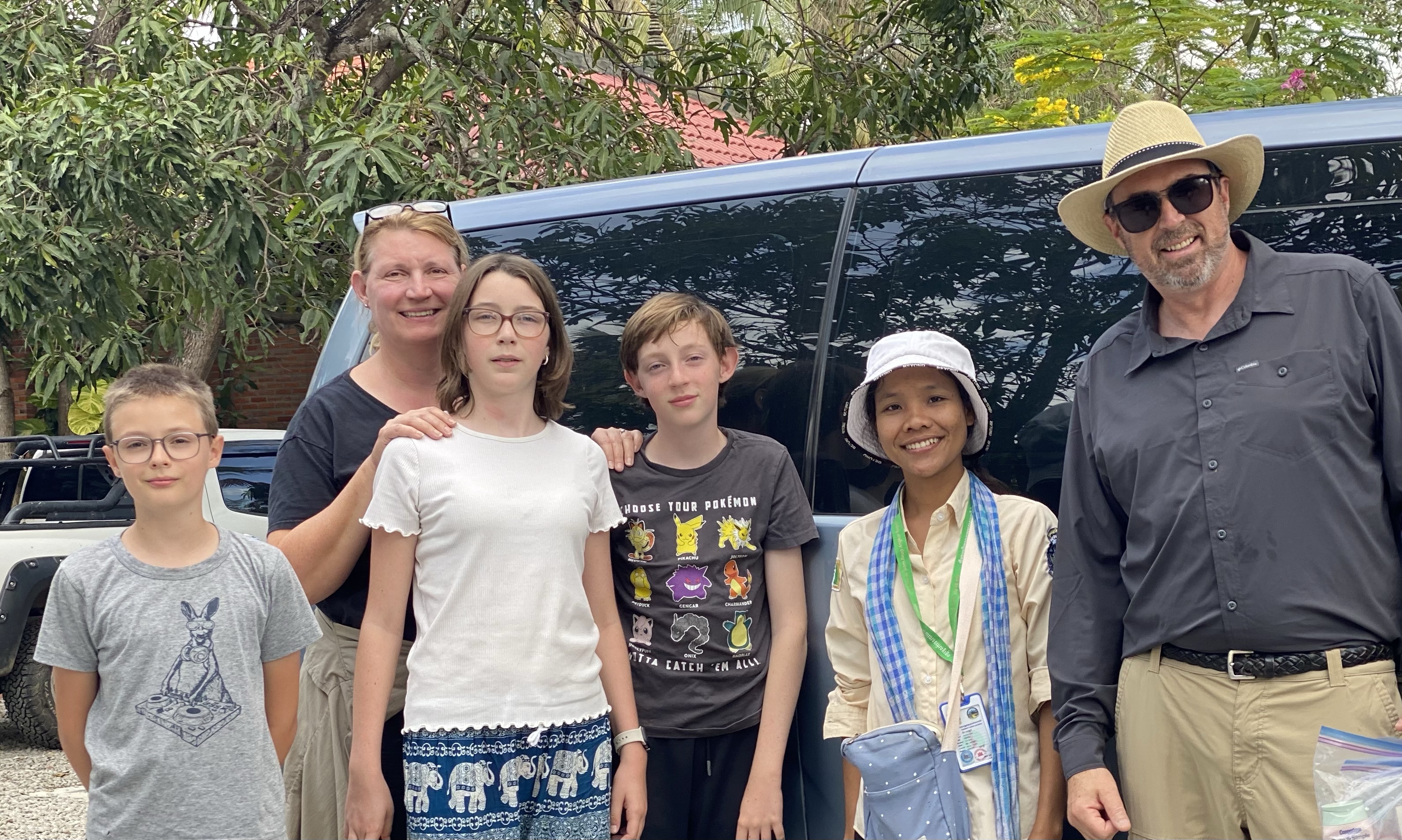
Our guide wanted to share not only her knowledge but also her country’s favorite dessert. On our drive to the next temple, we stopped at a roadside stand for Nom Akor, a sweet rice cake made with palm fruit and coconut. To our American palate it had a strange smell, a slightly rubbery consistency, and a good flavor. We enjoyed it but didn’t grab for a second.

Our next visit was to a temple considered by many to be the jewel in the crown of Angkorian art. Banteay Srei is cut from stone of a pinkish hue and includes some of the finest stone carving anywhere on earth.
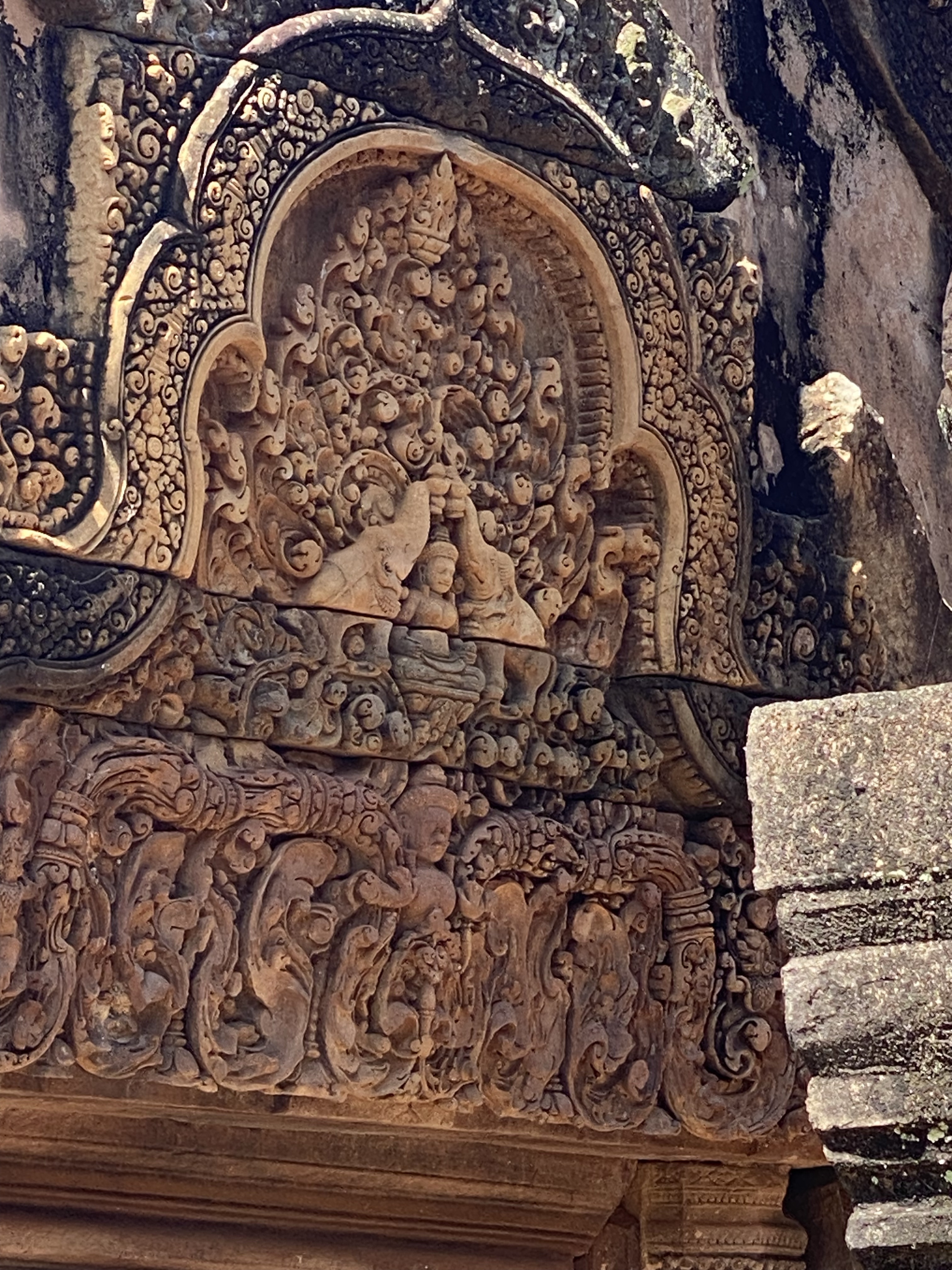
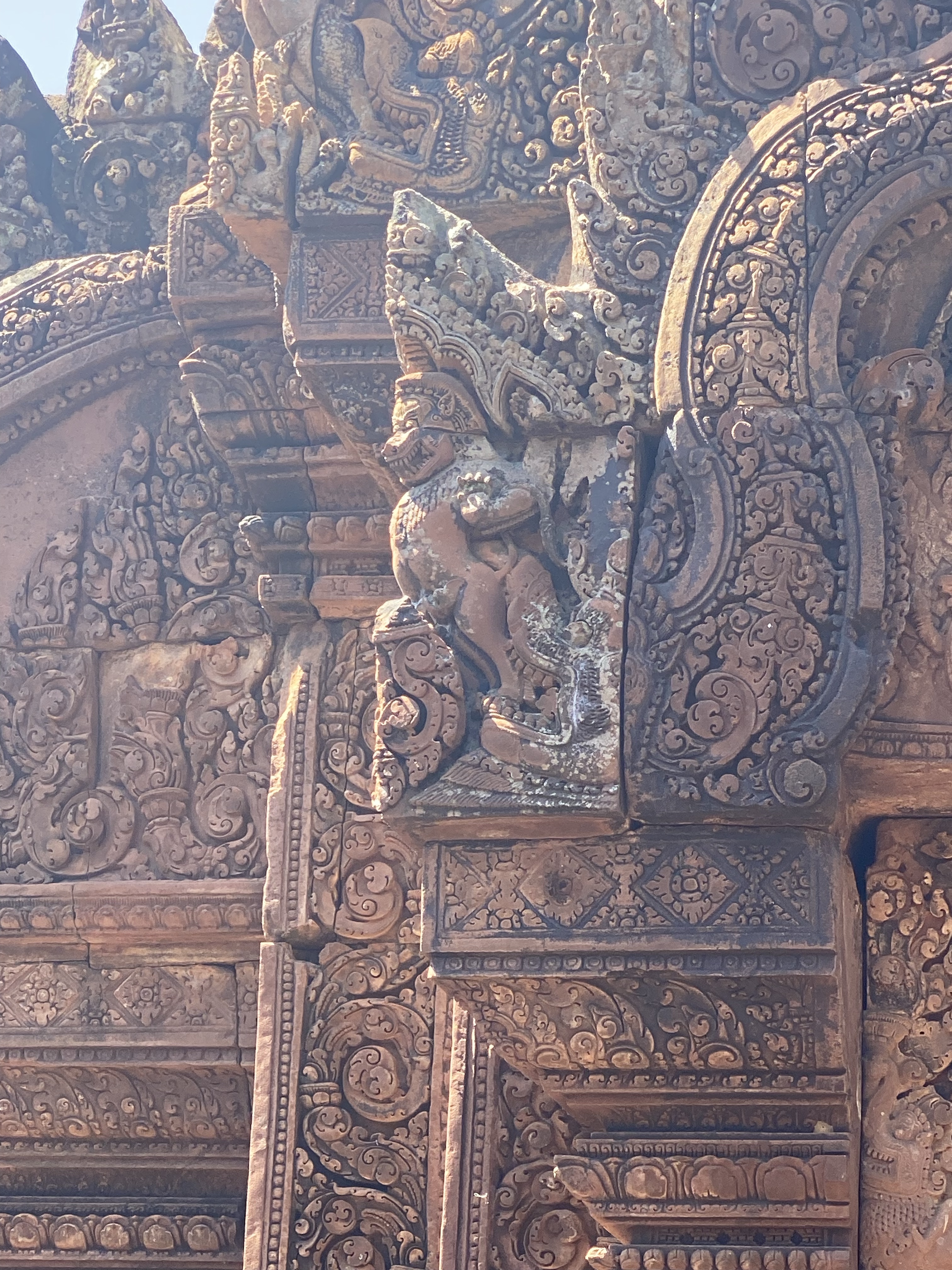
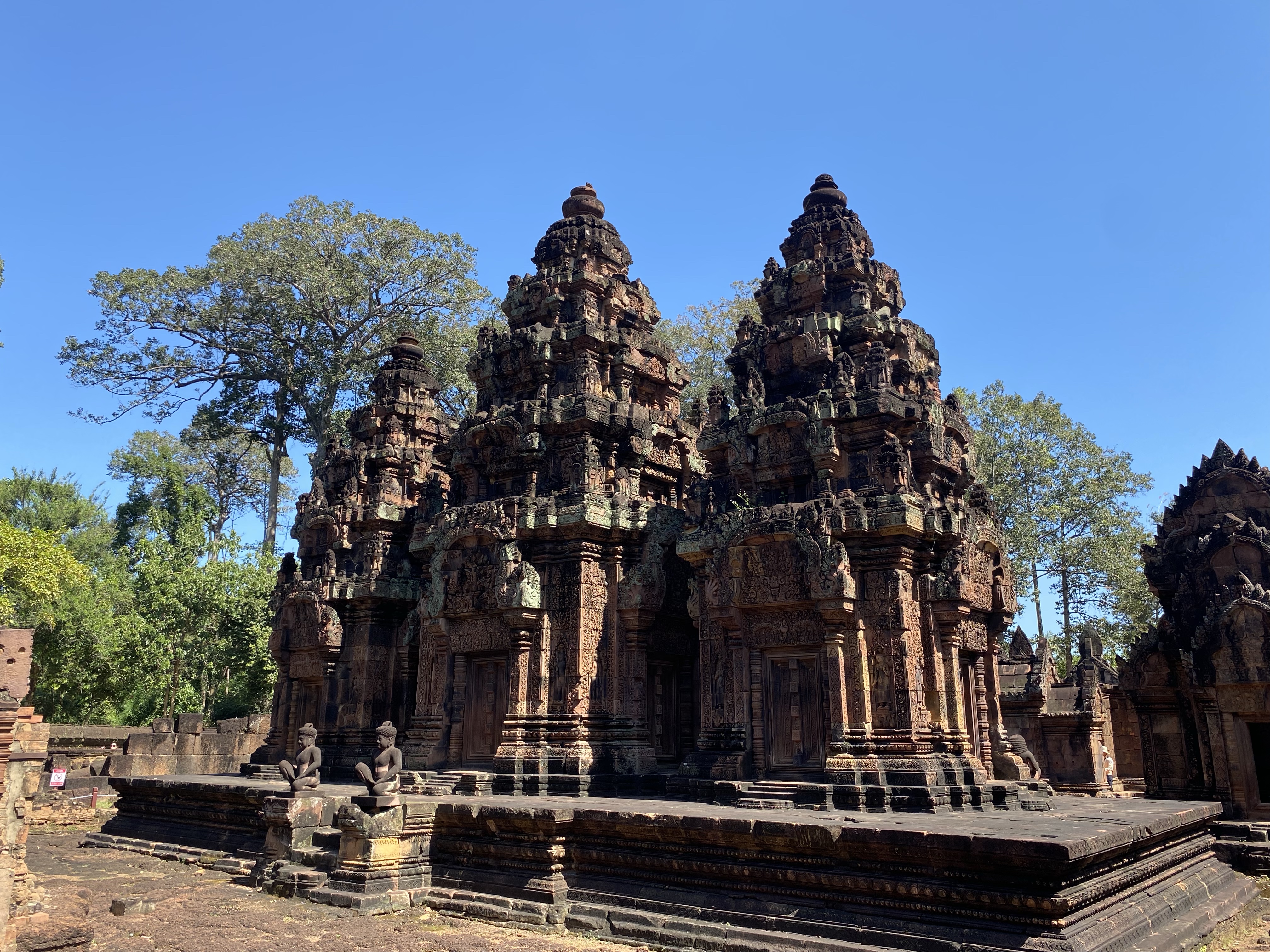
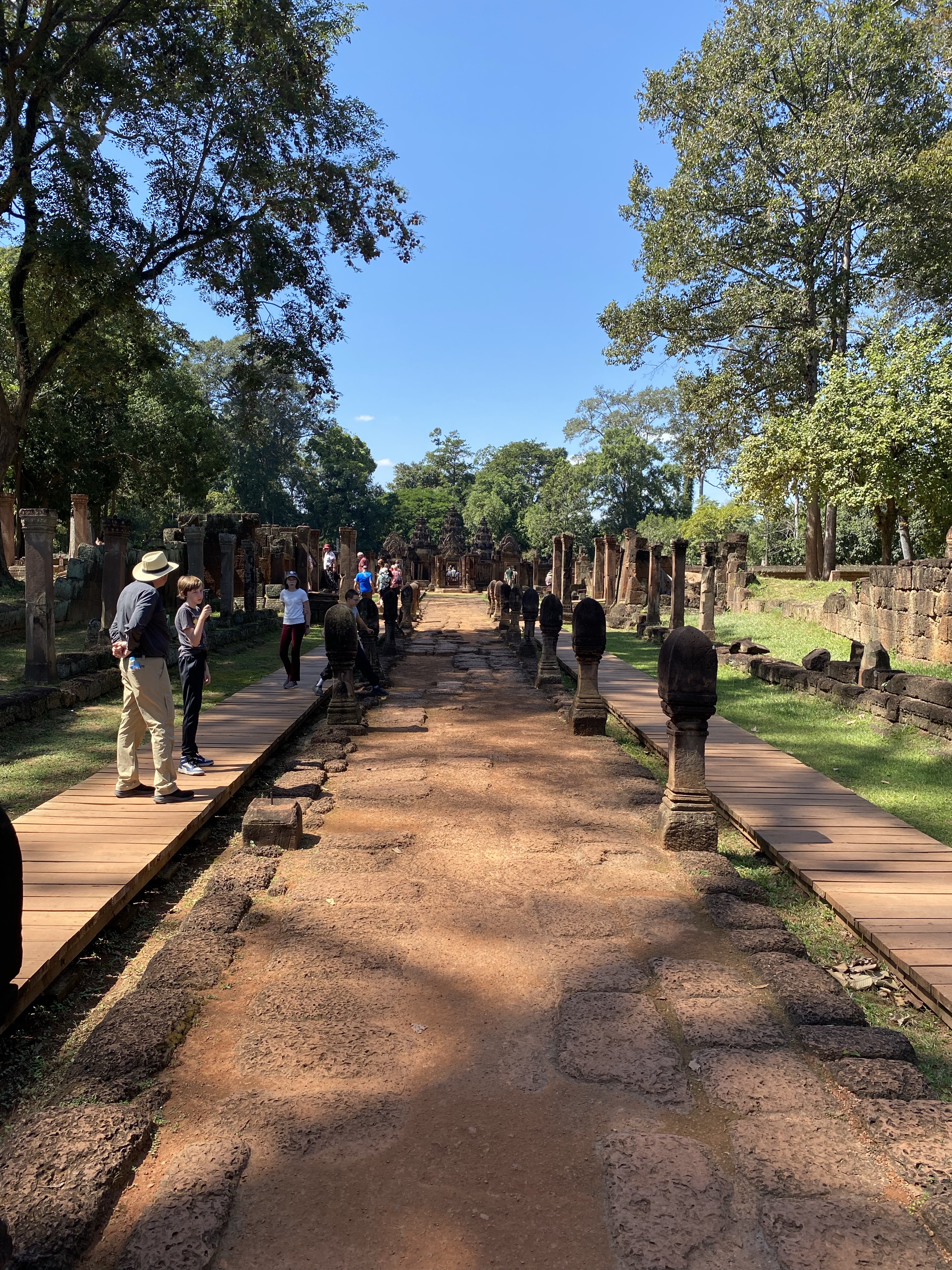
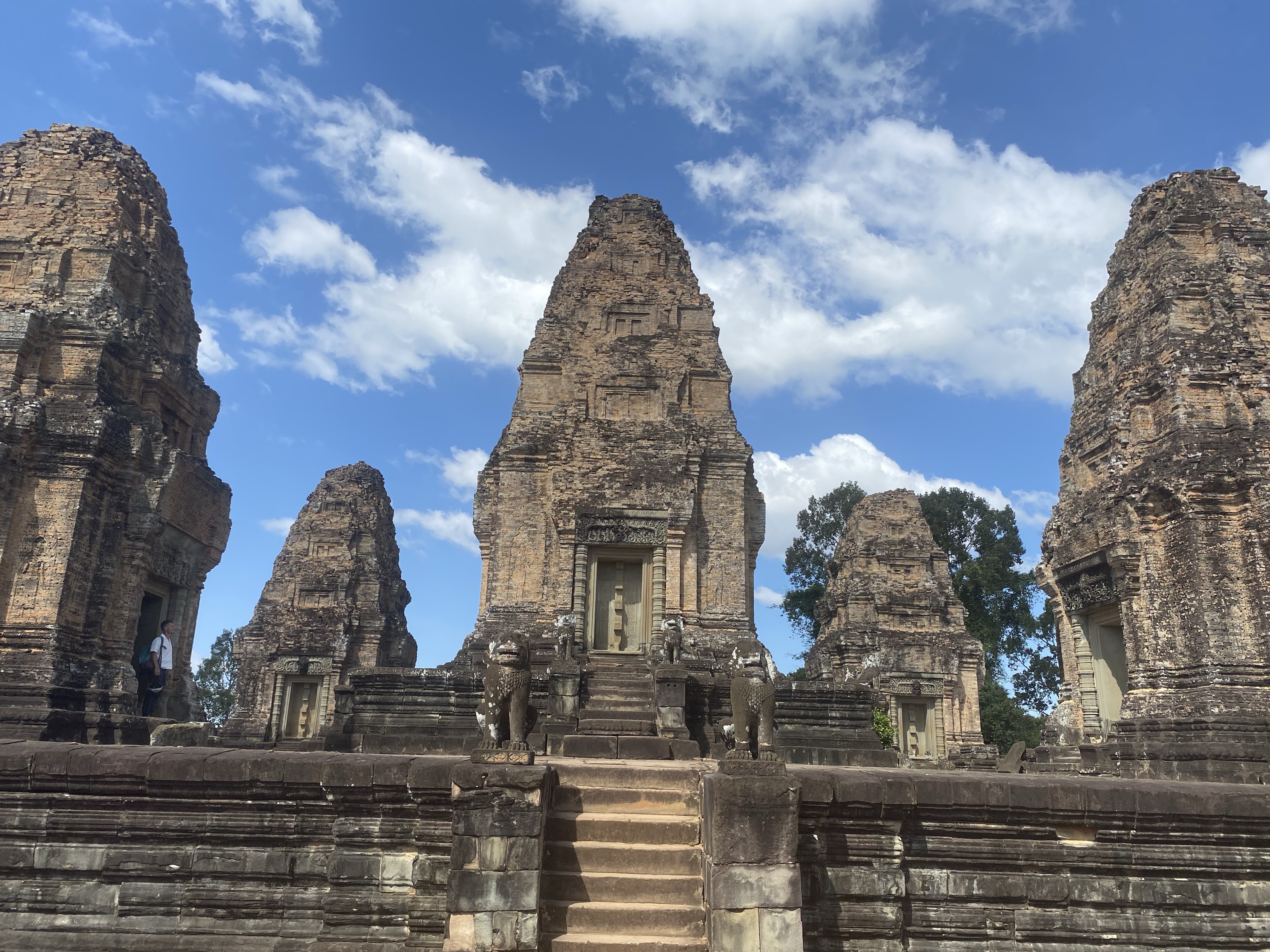
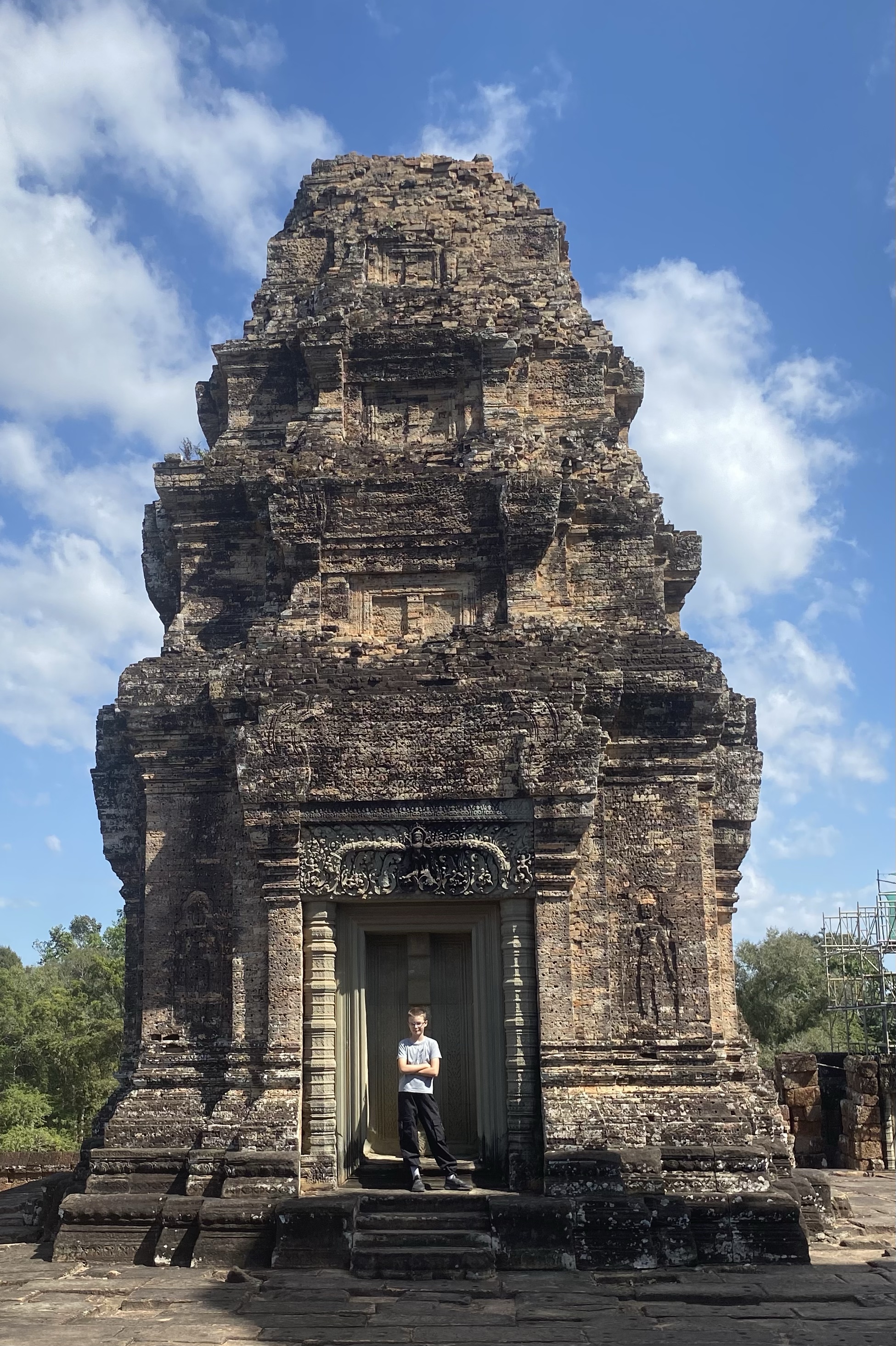
The last two temples took us back in time to the 10th century. While they were more weathered, they still inspired awe at the level of craftsmanship. Meanwhile, the heat and humidity inspired a wardrobe change for a couple of our Adventurers.
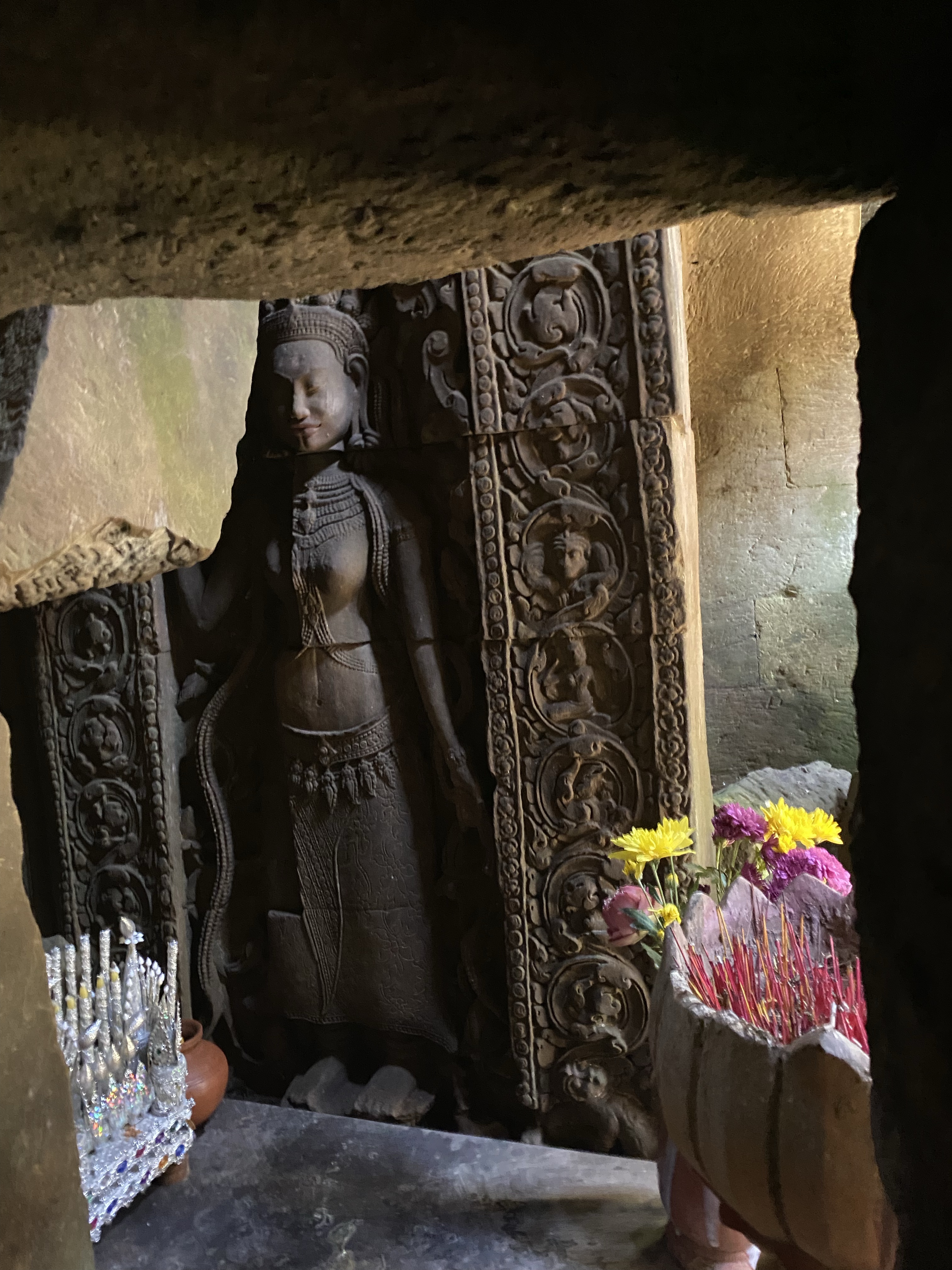
After a rest in the A/C and some refreshing showers, we headed to a dinner show featuring traditional Khmer dances. We had seen carvings of the spiritual dancers called Asparas dancers at Angkor Wat. And CreeperPuppy even tried to imitate the complex pose from one on a doorway litnel this morning. But seeing the intricate hand and foot movements in person was a great way to end our time in Siem Reap.


 5 Adventures Together
Really enjoying all the pictures.
LikeLike