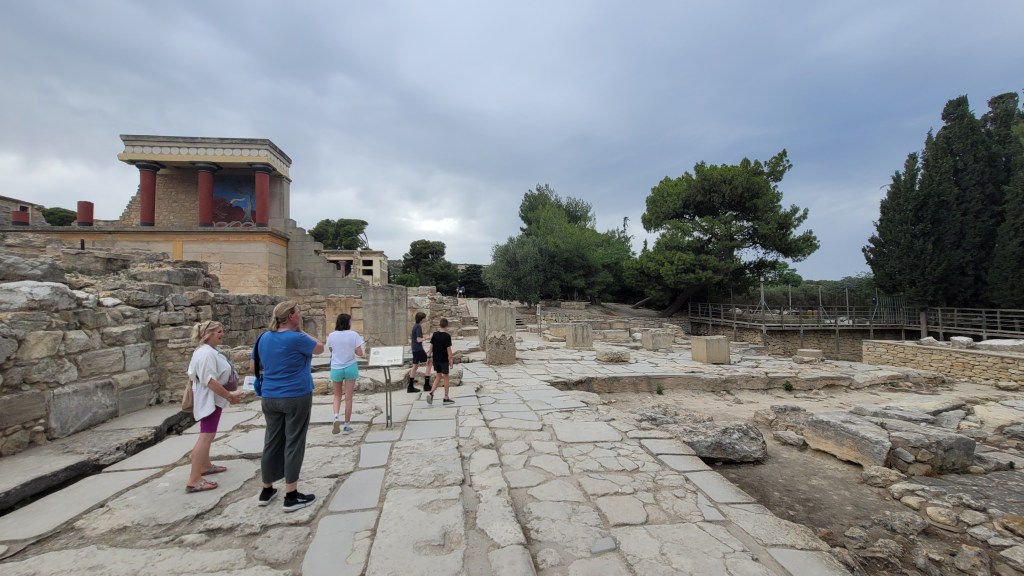
We wanted to see the famed island of Crete for a number of reasons, and a primary one was to see the Palace of Knossos, which is the legendary labyrinth of Greek mythology.
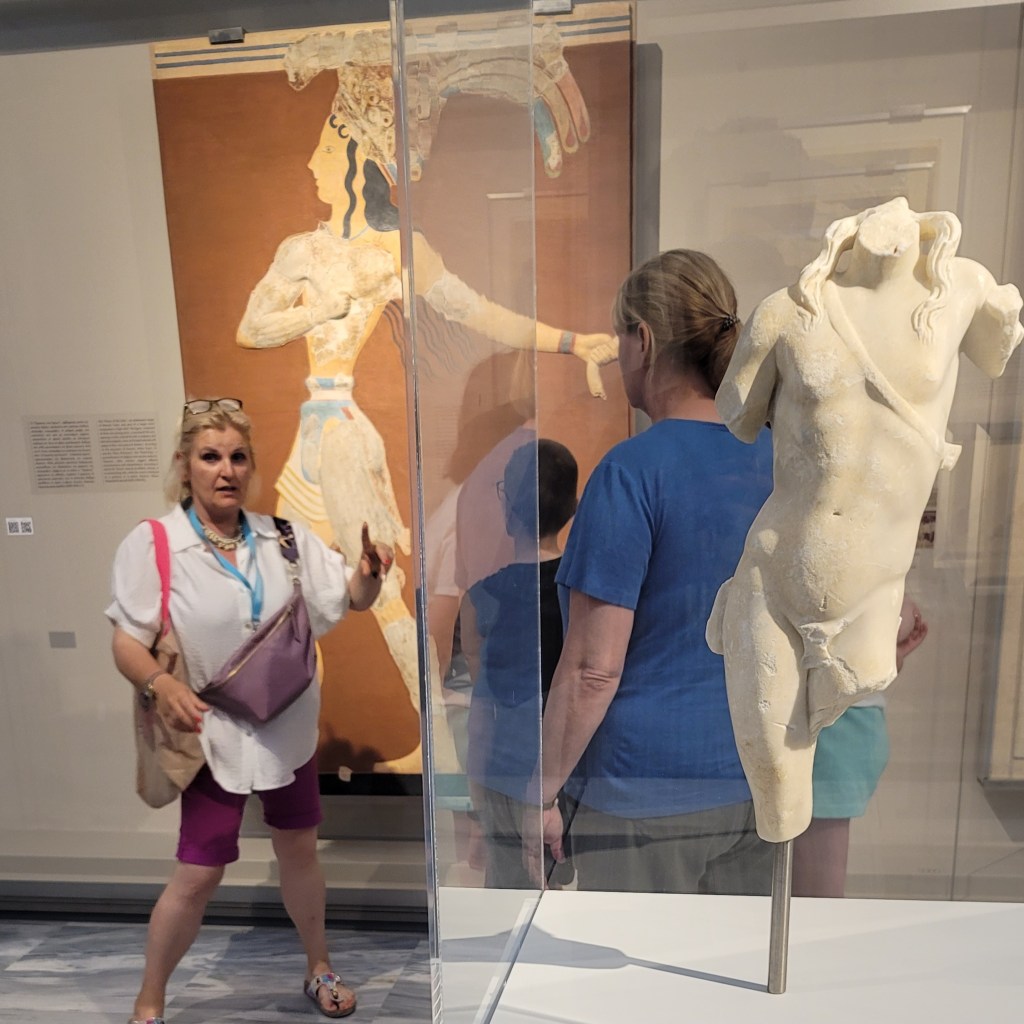
We were guided today by an archeologist whose specialty is Roman artifacts at the Knossos site, but her knowledge is extensive, and she managed to keep everyone’s attention through the main museum and the grounds of Knossos.

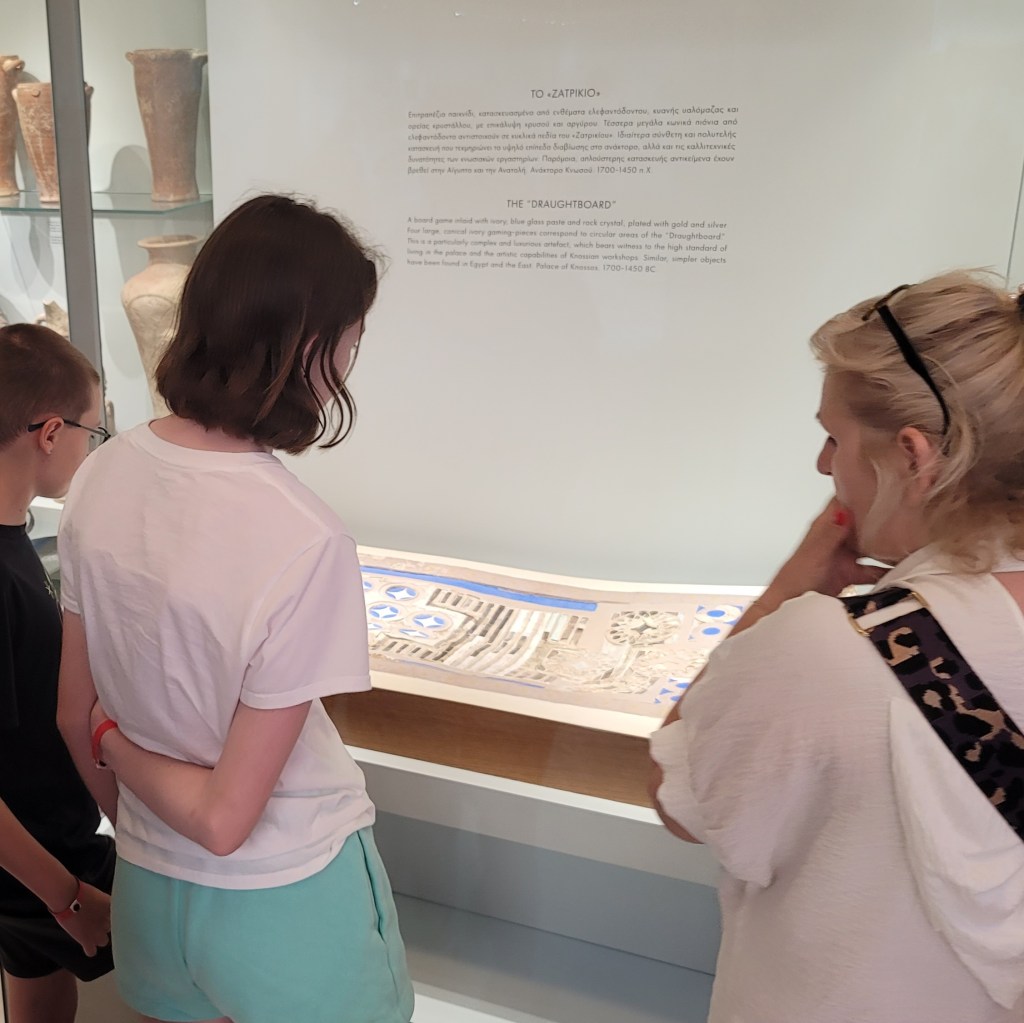
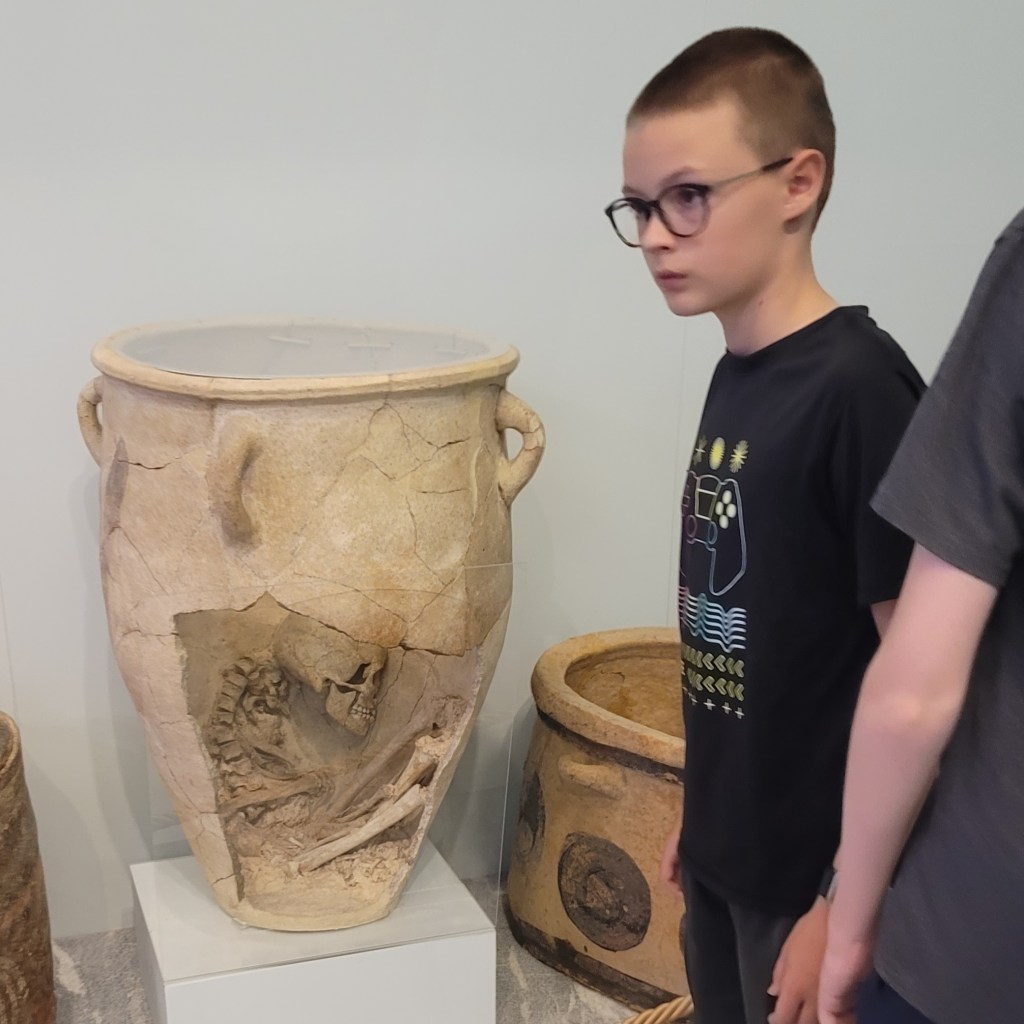
In the archaelogical museum of Heraklion, the Phaistos Disc is one of the most noteworthy treasures. The enigmatic inscribed clay disc bears forty-five pictorial signs, which are arranged in different combinations, presumably representing words. The signs were stamped in a spiral configuration on both sides of the disc by seals of soft clay. Some academics believe this to be the earliest typographic print example (it is from 17th century BC).
Experts have not yet come to any definitive conclusions regarding the contents of the inscription and its meaning. The repetition of certain combinations of signs provides the most persuasive evidence that the inscription is a hymn or a text of magical incantations. At any rate, we were all pretty impressed with it.
After this museum, we headed a few kilometers east to the Knossos palace site. Imagine for a moment while Dad drives white-knuckled through tight winding streets of Heraklion. He remains worried about the 400€ deposit on this Suziki Swift…
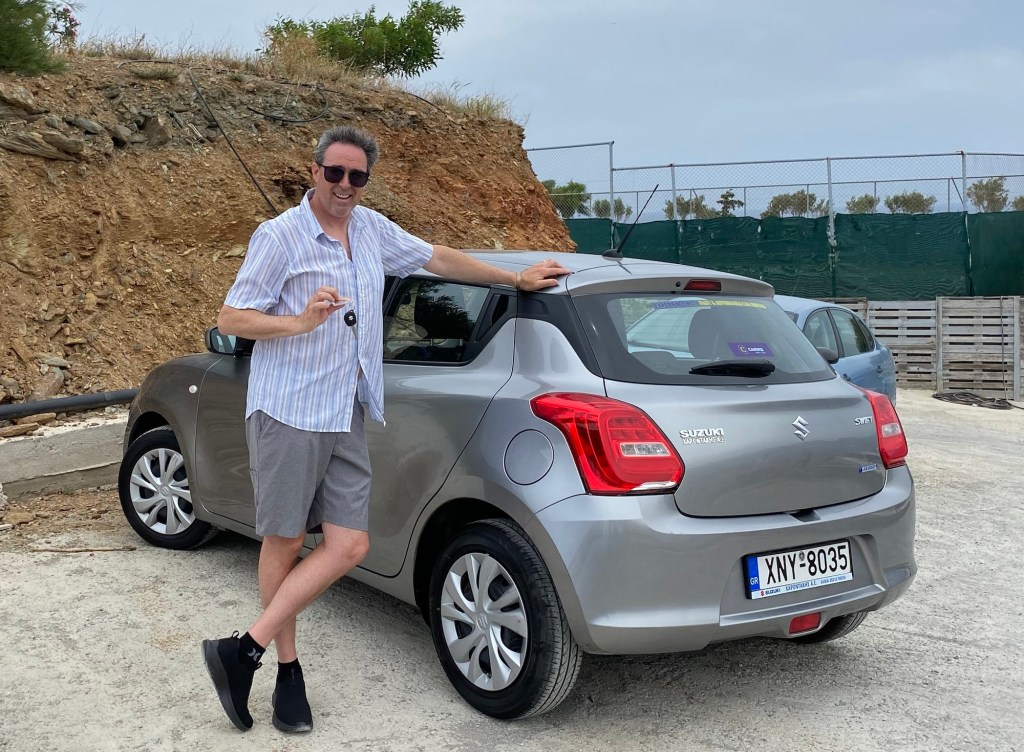
….and he’s concerned about maintaining contact with our esteemed guide who is meeting us at this next destination. Meanwhile, Tiffany is ably giving him navigational direction as our children are pointing to roadside cats (“sleeping, not dead”) and playgrounds of interest (“you are too old for that park”).
We arrived at Knossos without irreparable harm to Suzi, the car, or Brian, the Dad. We learned that the legendary mythical labyrinth is really a bit of a myth.
During the Bronze Age, this area was dominated by two civilizations. The Minoans on the present-day island of Crete and the Myceneaeans from the mainland of present-day Greece.
Apparently, when the Myceneaens came to Knossos and met with the Queen, they were astonished to see a woman wearing a golden mask receiving tribute from them, her subjects. Upon returning home, they found it easier to convey to their people that there lives a half-man/half-bull beast which demanded their gifts and offerings. The true fact that the Palace at Knossos was labrythine and required navigational guides only built the story into a true myth.
We learned several things today.
Among the most amusing is that our giant children can find a fun playground in any city in the world. This is our first Greek playground. It is probably not our last.