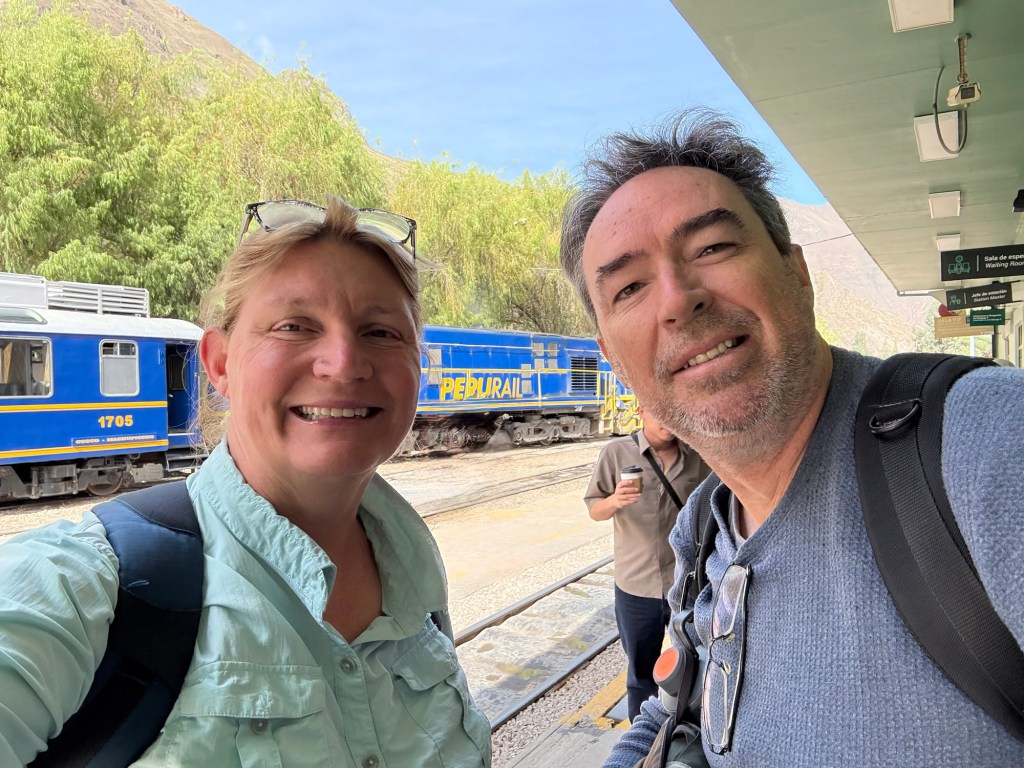
Nine Adventurers left our Ollantaytambo house at 7:45am stocked with to-go breakfasts and a change of clothes. We loaded into 4 tuk-tuks and traveled 7 minutes all the way across town to the train station. The trip cost $12 for all so we felt pretty good about the start to our day.
The train of choice was Peru Rail and our destination was Aguas Calientes about 90 minutes up the rails.
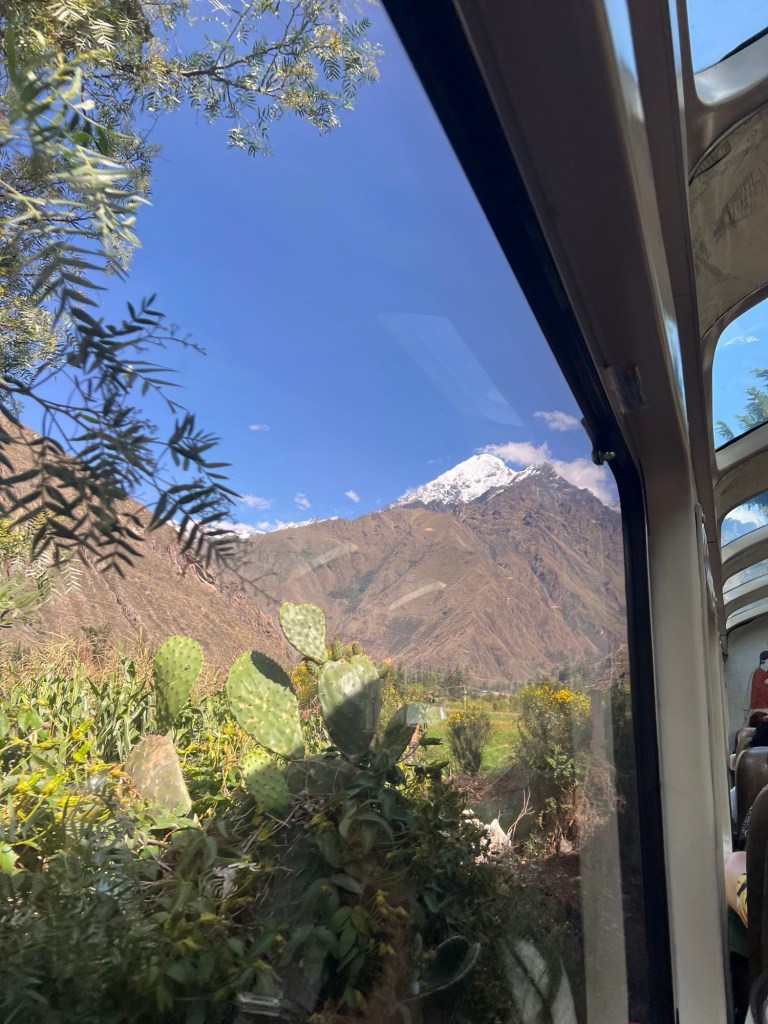
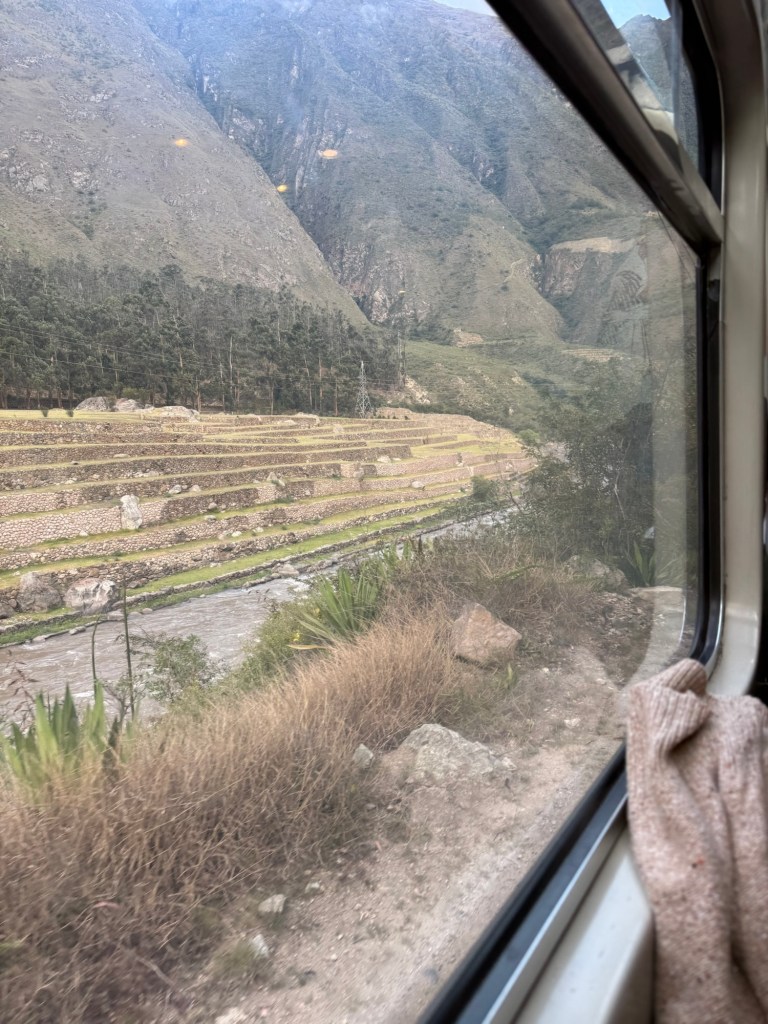
The ride was slow and wobbly but the scenery as we wound our way through the narrow Andean valley along the Urubamba River was spectacular.


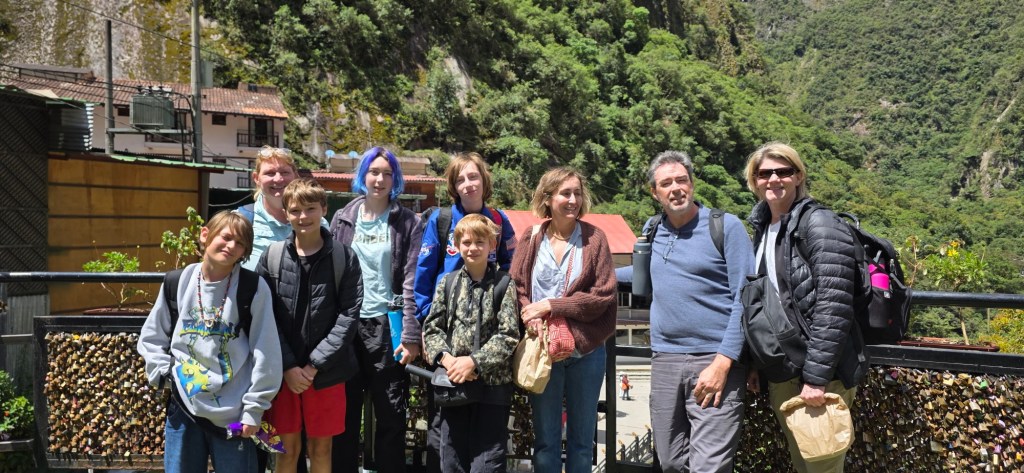
Why Aguas Calientes? It is the launch point to a UNESCO World Heritage site and one of the New Seven Wonders of the World – Machu Picchu.
After stowing our gear, we joined a long line for the bus that would take us up the mountain thirteen switchbacks to the entrance gate. While waiting, we were approached by a friendly looking guide nick-named Freddy. He seemed professional and spoke great English for our mostly non Spanish speaking group so we engaged him to take us through the site. Maybe we were just fond of his name.
Machu Picchu is a city believed to be built during the early/mid 1400s by the Inka, one of the indigenous peoples of South America. It is world famous due to the preservation of the buildings and impressive terraces built into the mountain. Most other Inka cities were destroyed during the Spanish conquest or were torn down and replaced with more modern buildings over time. It’s also constructed almost entirely out of granite which helps with durability.
The city was abandoned prior to the Spanish Conquest, probably in the mid 1500s. Since it is difficult to access, it was left to the jungle to reclaim and conceal for the next 375 years.
In the early 20th century a Peruvian archaeologist and then an American historian rediscovered Machu Picchu. It was he, Hiram Bingham, who promoted it to the world.
It was absolutely spectacular to see in person.
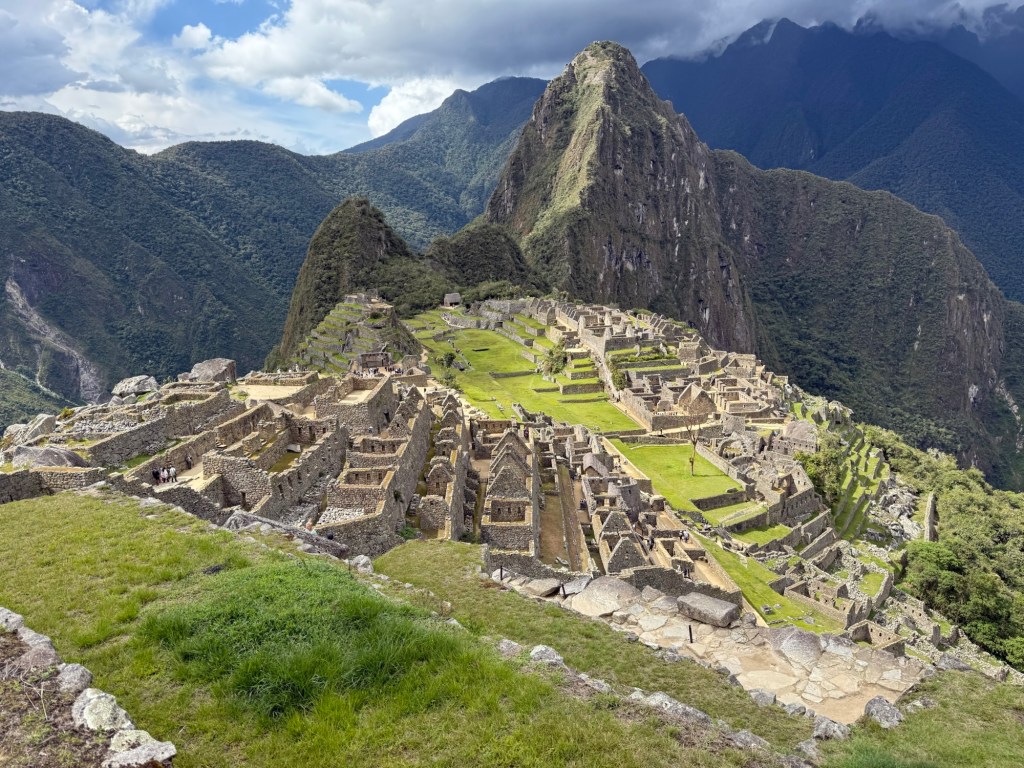
The forecast called for rain and thunderstorms but we started our tour with blue skies and puffy white clouds.
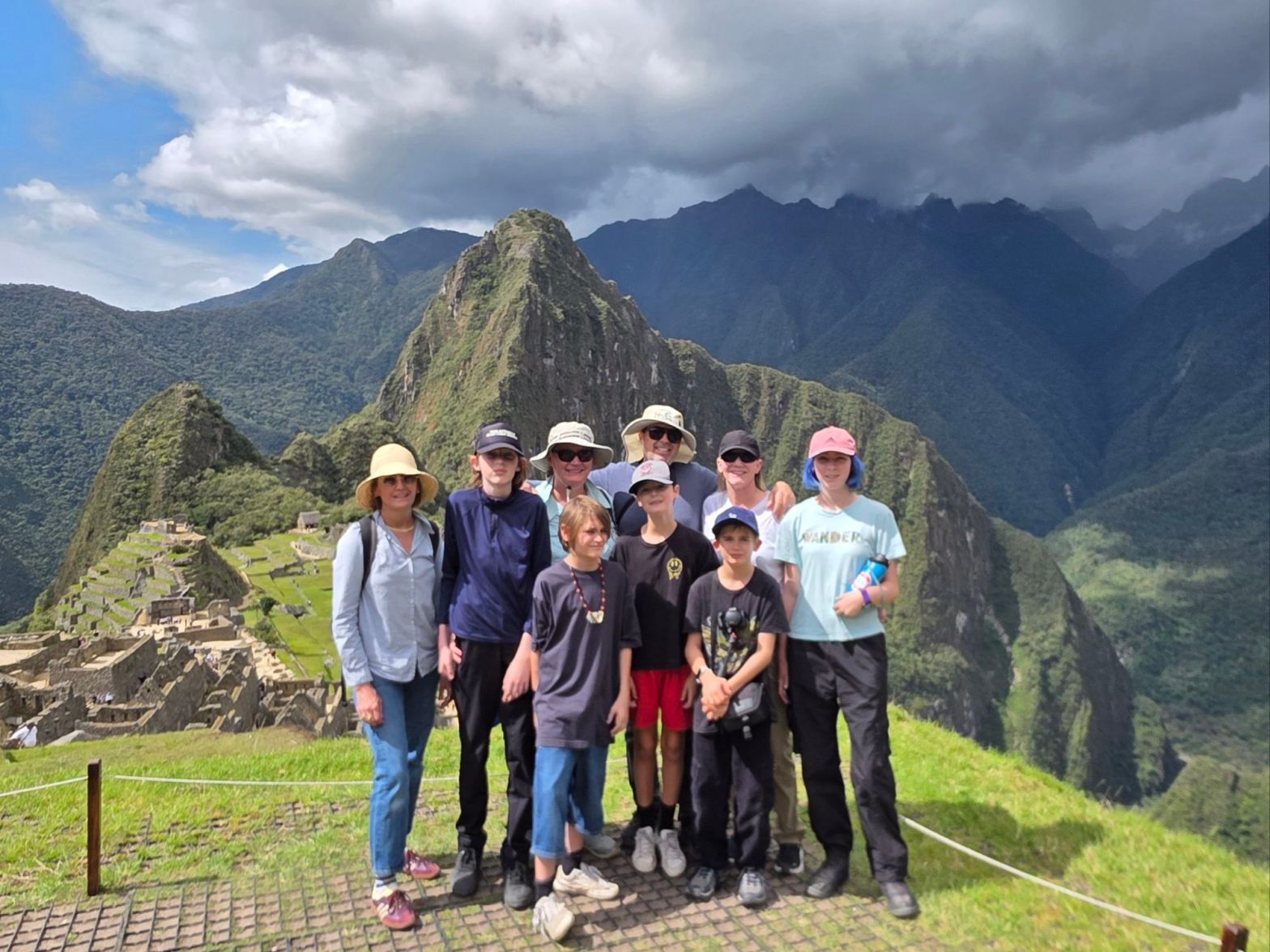
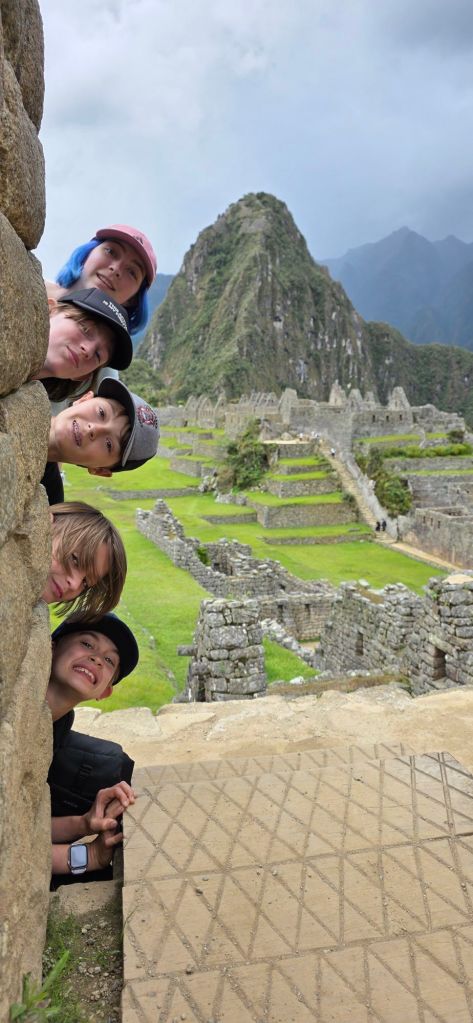
Freddy was obviously a pro. He strategically stopped for photo or education breaks as we climbed 20 minutes up stairs to the terraces. The altitude is lower than Ollantaytambo but it was still a factor for us and he made sure no one keeled over. The pictures he took for us are great as well. We got all the standard group shots as well as one of the kids that was a little more fun. Promise no photoshop or AI on that one.
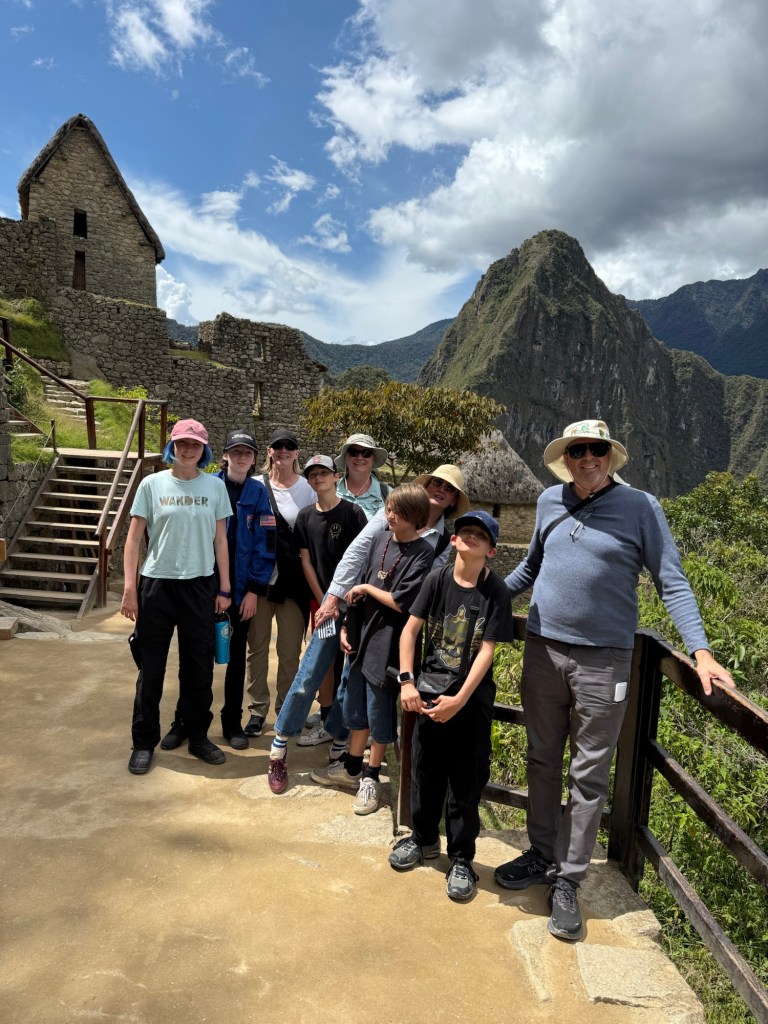

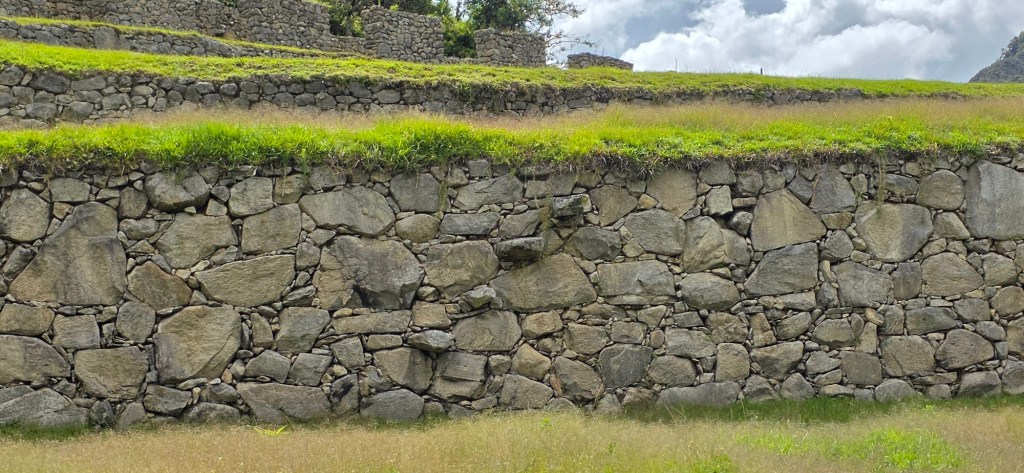
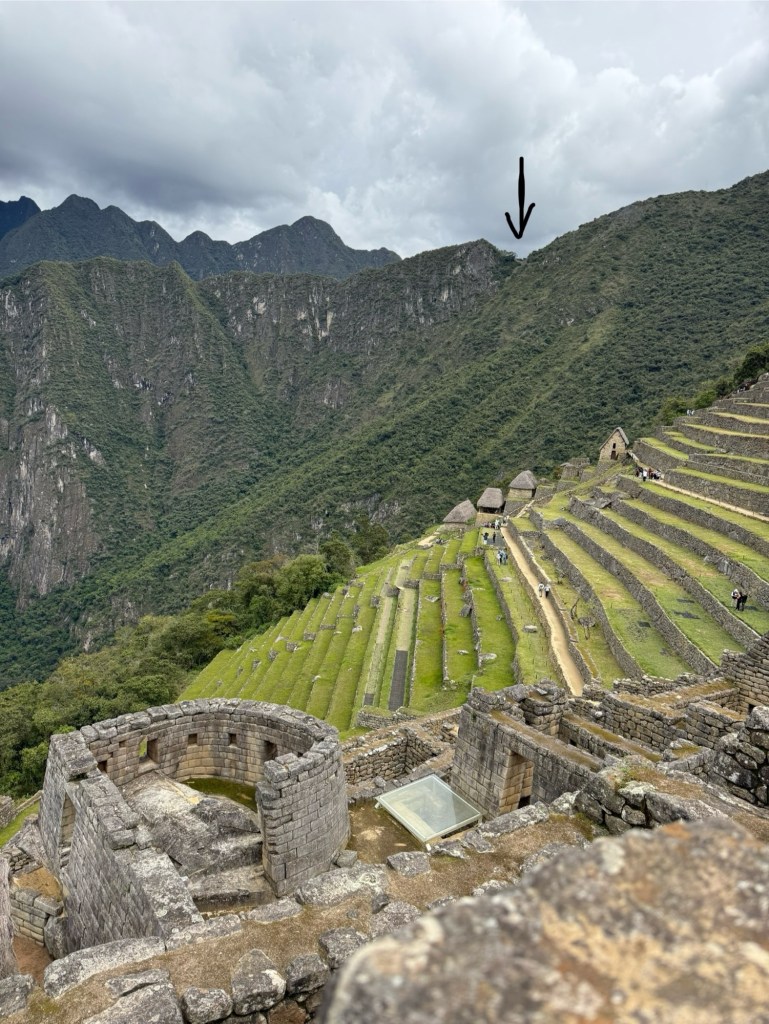
Starting at almost the top of the site, we saw the farming terraces. A feat of engineering built with a front wall of hand cut stones using the natural bedrock as the back.
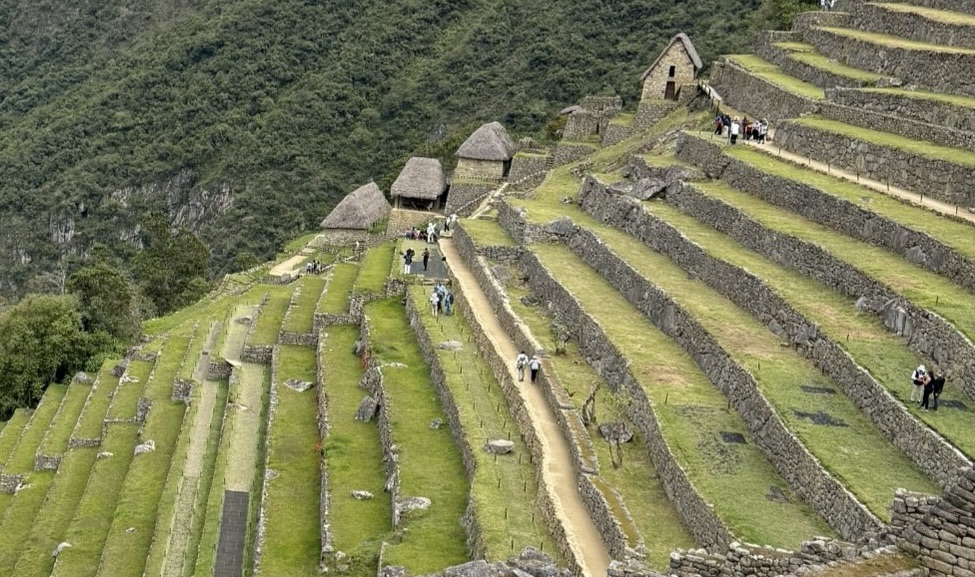
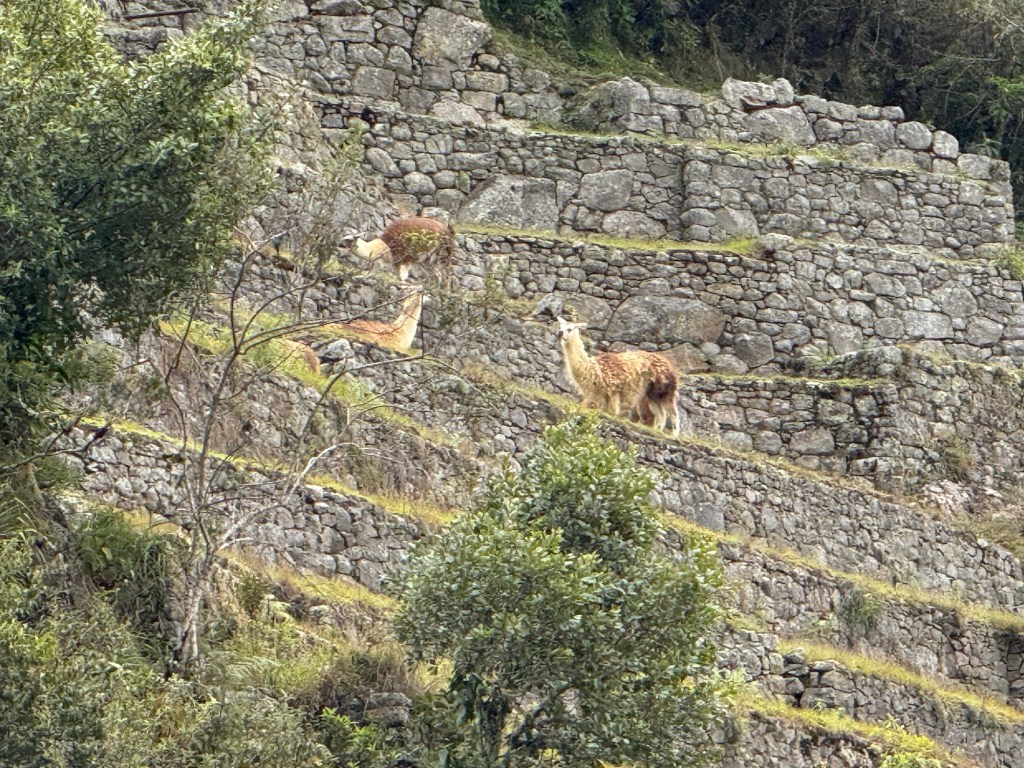
They were fitted with a bottom drainage channel and then the space between mountain and wall was filled with layers of materials that nurtured the crops and let excess water escape – preventing landslides. Sequenced flat stones sticking out about 18 inches from the wall created stairs from one terrace to another for the farmers.
Below the farming terraces began the residence buildings. The highest on the mountain were for the royalty and then descending to more regular folk. The intentional city planning is evident everywhere. The buildings are set east to west to maximize sunlight during the day. They are arranged down the incline so one row of houses doesn’t block light from the next. The windows and doors are trapezoidal and the walls lean in slightly to increase stability during earthquakes.

But they are small, used only for sleeping. No cooking area, no chairs, no theatre room (obviously). Life for the Inka was lived outside in the community. Given everything is made of granite stones, they were almost certainly cutting or hauling heavy rocks all day.
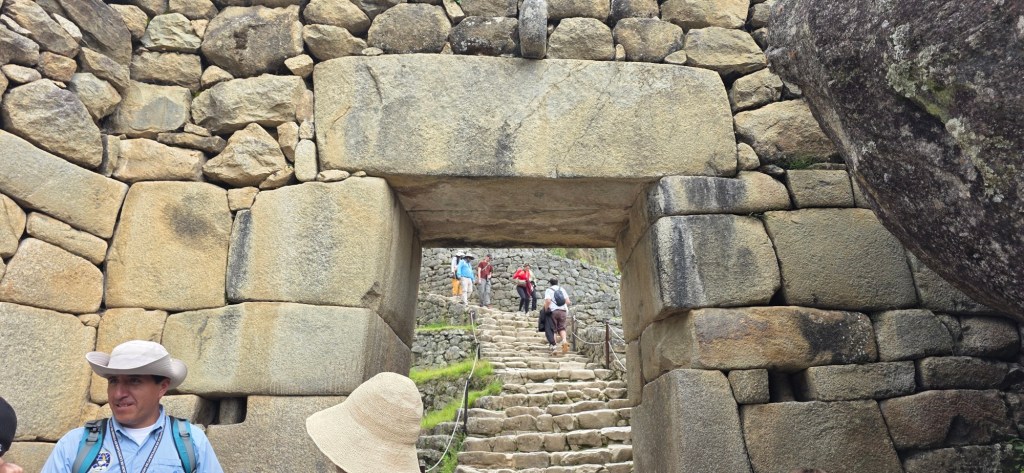
We continued through the main part of the site, and saw the famous round Sun Temple and in the distance the Sun Gate. They are positioned at such an alignment that on Dec 21 the sunrise passes through the gate and then through the window of the temple.
We stopped by the enormous Sacred Rock, carved to look like the mountain behind it.
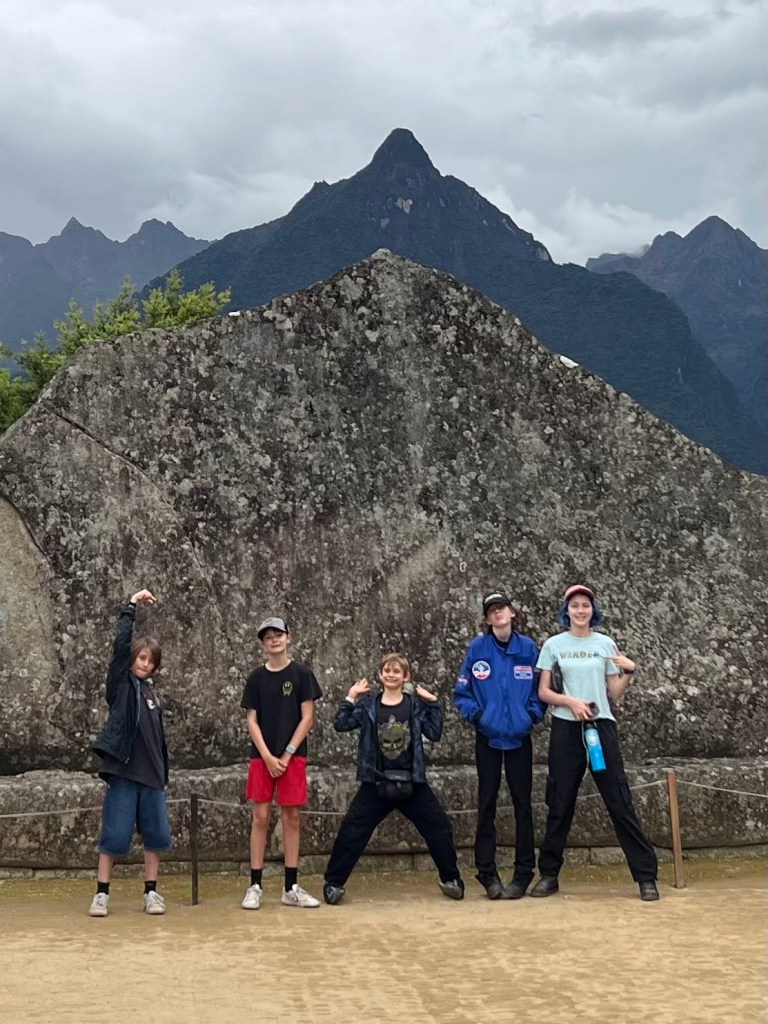
There were also a couple instances where the kids were asked to join photos
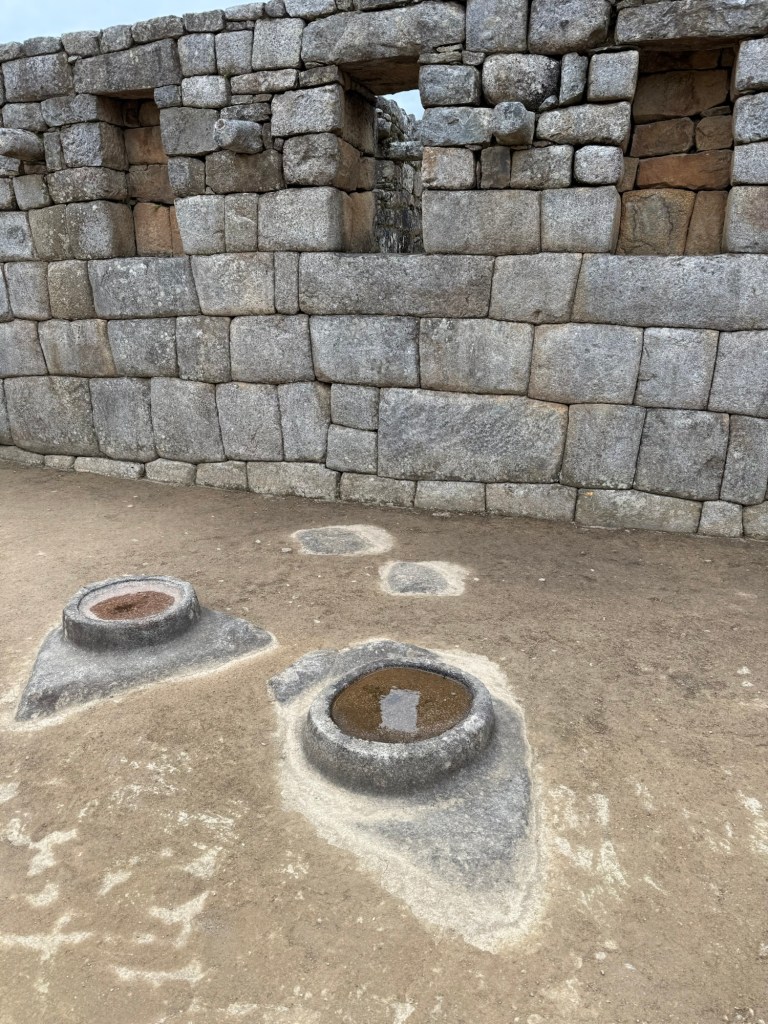
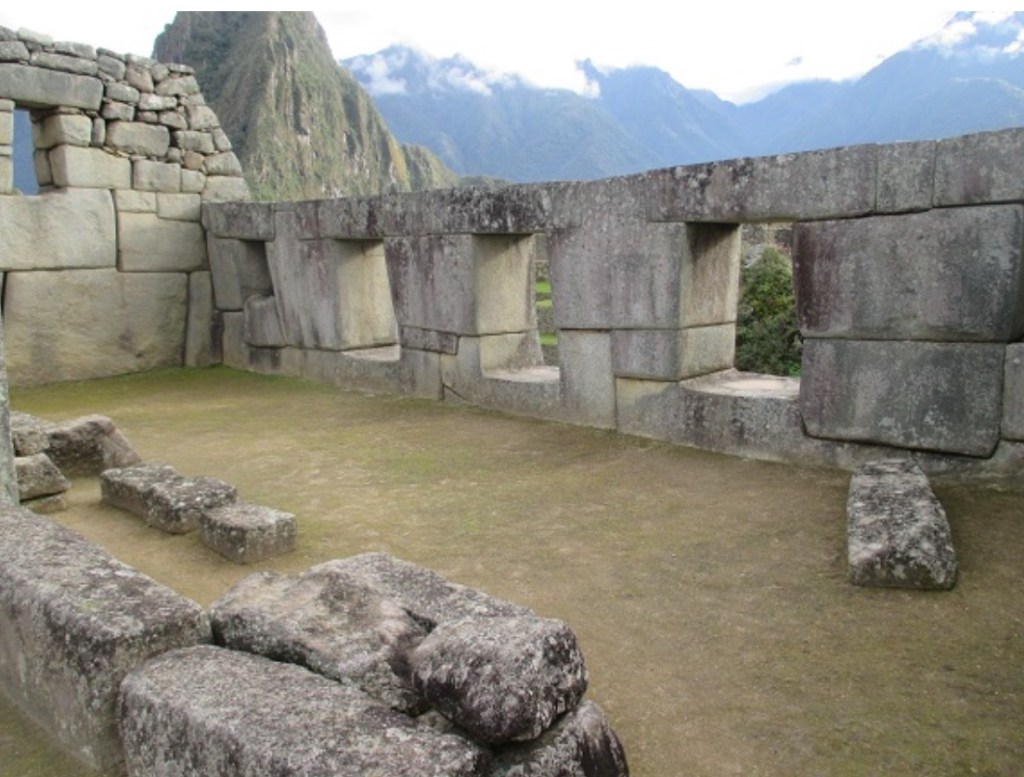
We finished the tour seeing the Temple of Three Windows and the Temple of the Moon in the Sacred Plaza. They are notable for their three large, trapezoidal windows that face east. These windows are believed to symbolize the three worlds of Inka mythology: the upper world (celestial bodies and sky) the earthly world and the underworld. The temples are also thought to have served an astronomical and ceremonial purpose.

After our bus ride back down to town we found a lovely restaurant by the river for dinner. Peru menus often have some meat options that aren’t typically available in the United States. One is Alpaca.
Another is cuy or Guinea Pig. This dish has been eaten in Andean culture for thousands of years and is considered nutritional and a delicacy. The kids were scandalized anyone could eat something so cute, Brian, Jessica and Tiffany all wanted to try it but didn’t want to be the one to order it. Tracy was out on eating any meat still attached to the bones.
Finally, Tiffany decided to take the plunge and see what all the fuss was about. And there was fuss – at least in the presentation. It was served hairless and baked but otherwise intact, sitting up on the plate. And to a mixture of delight and disgust, it was wearing a brightly colored woven hat!
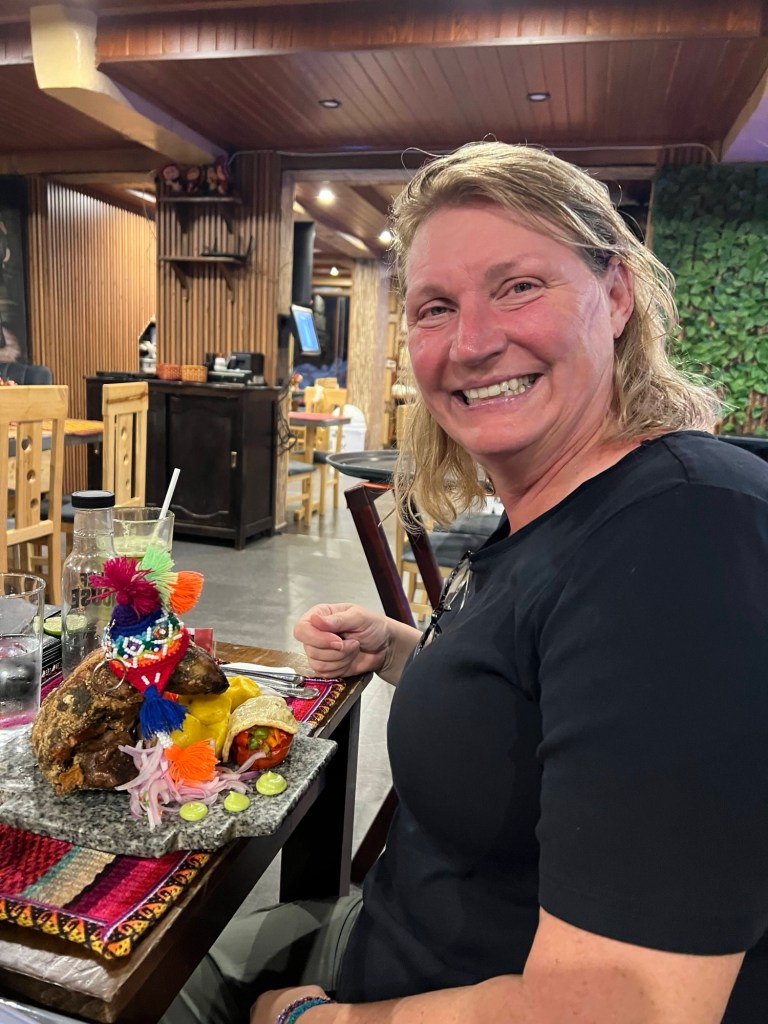
Once the pictures were taken, the server used large scissors to cut it into pieces that looked more like food and less like a creepy household pet.
The meat was rich and moist – most similar to dark meat turkey. Which seems appropriate on the day of Thanksgiving in the US.
We are a bit behind schedule on the blog – this day took place Nov 27, 2025
 5 Adventures Together