At this points in a trip, some of the 5 Adventurers are more enthusiastic about morning tours after a day of travel than others. It was true this morning of Day 11 so 2 of us set off to visit the Royal Palace (Kungaliga Slottet).
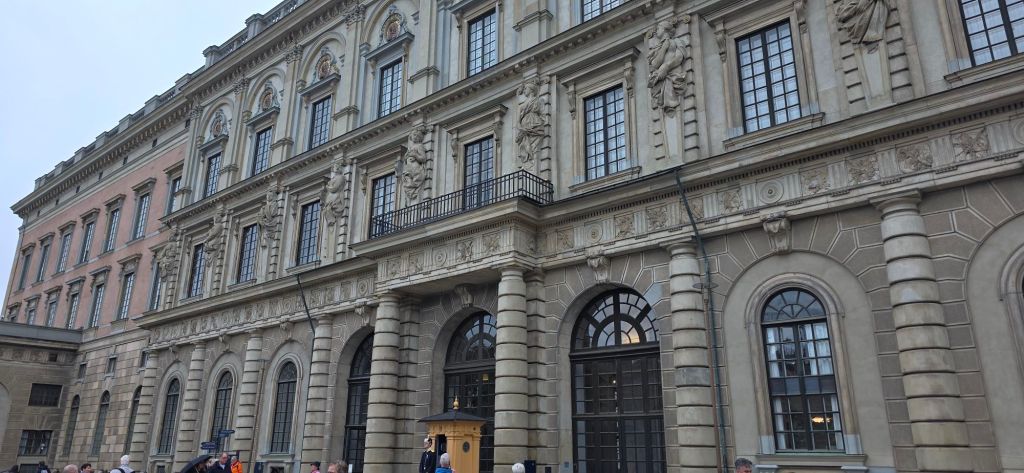
We noticed a number of people walking around the palace and on the advice of one the Adventurers began following them.
And following them.
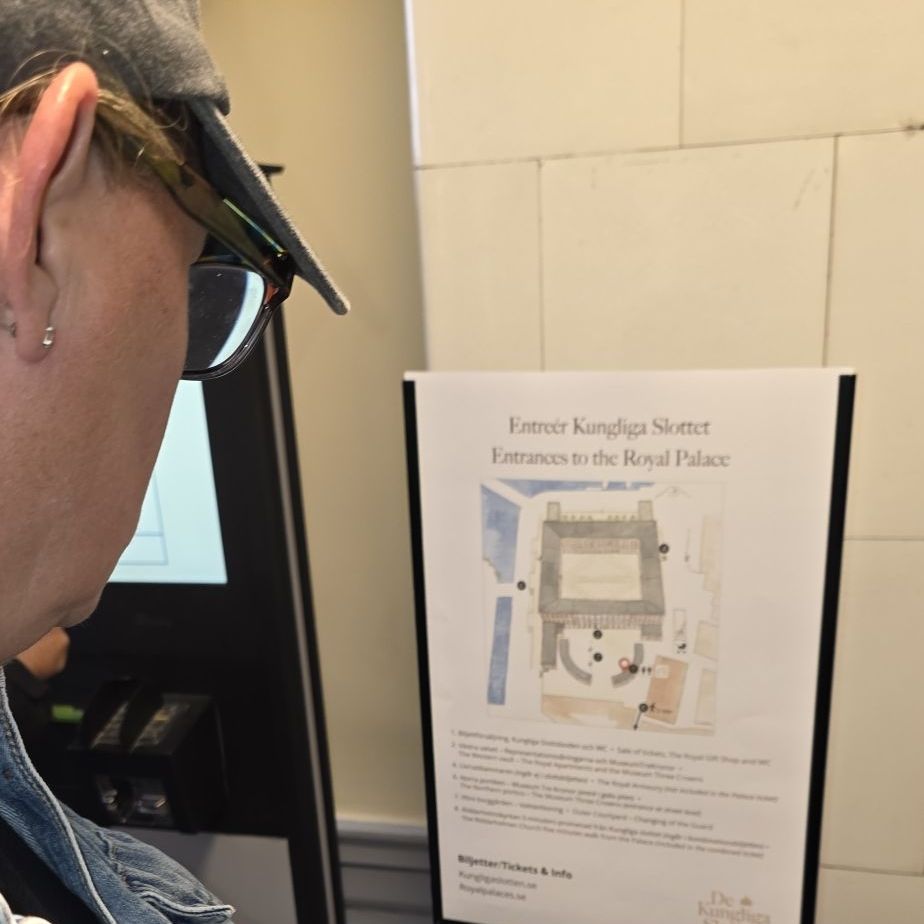
And encountering many doors protected by stern looking guards. But no main entrance. So, one of our more resourceful Adventurers found a map. And the other Adventurer sheepishly followed her.
Once inside, we learned that the palace is the diplomatic home of the king and is used for many ceremonial events throughout the year.
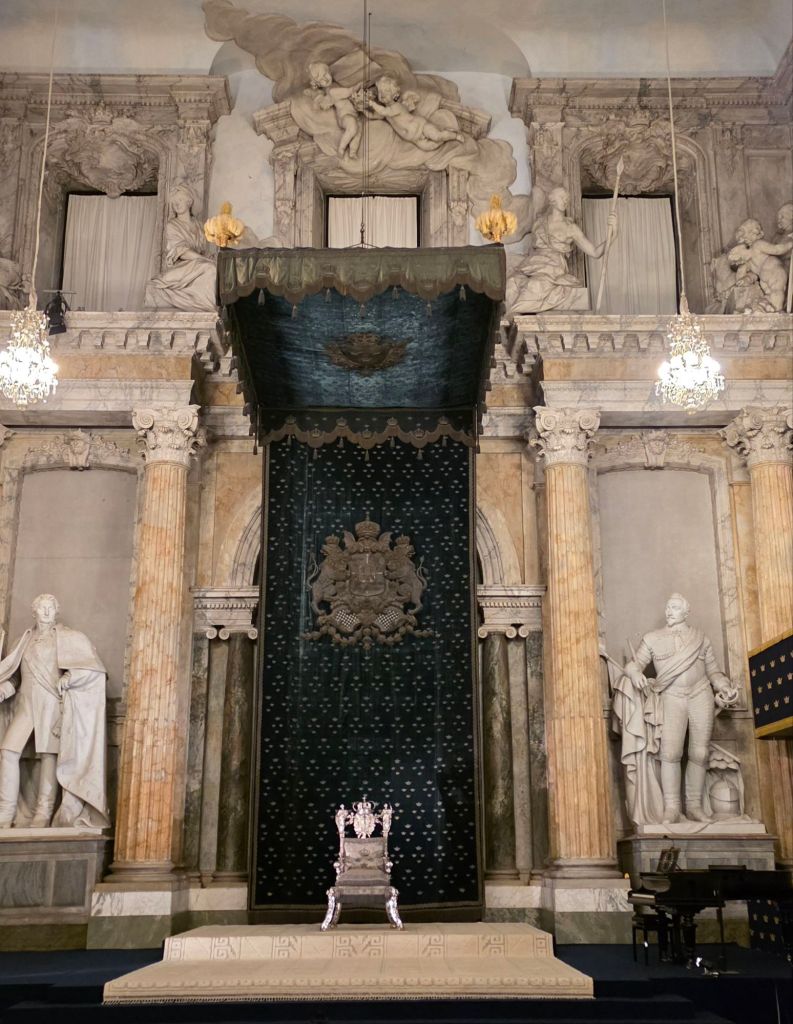
This silver throne was a gift presented to Queen Kristina in 1650. The backrest features two female figures representing Justitia (justice) and Prudentia (prudence) to guide decision-making.
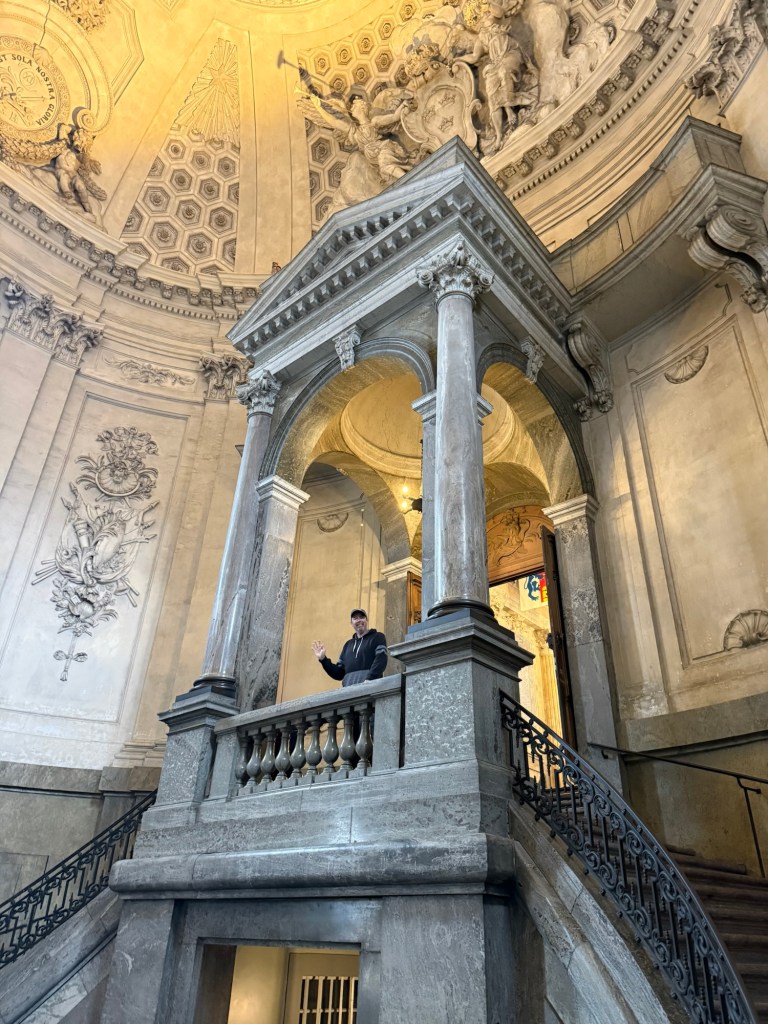
We toured the Bernadotte Apartment which was the royal residence between 1754 and 1907. Several of the rooms have been maintained as they were 100 years ago. Others have been renovated or modified for continued usage into the 21st century.
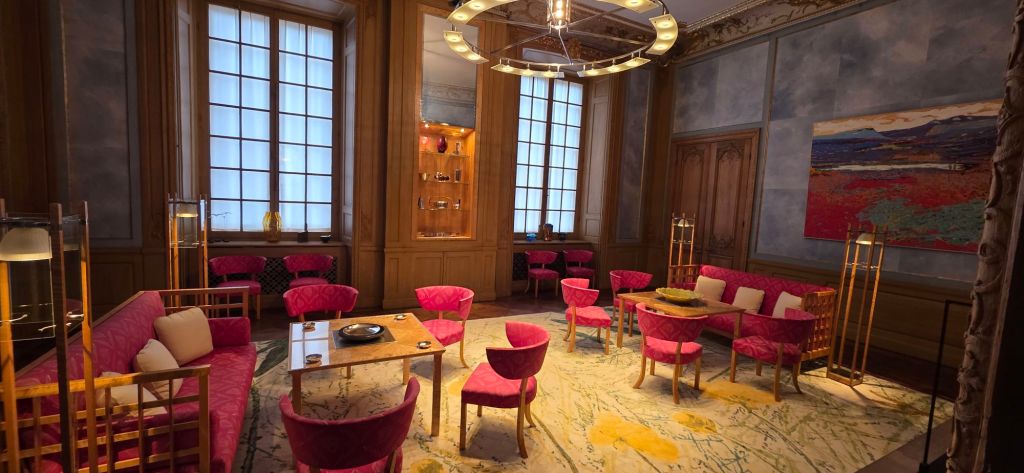
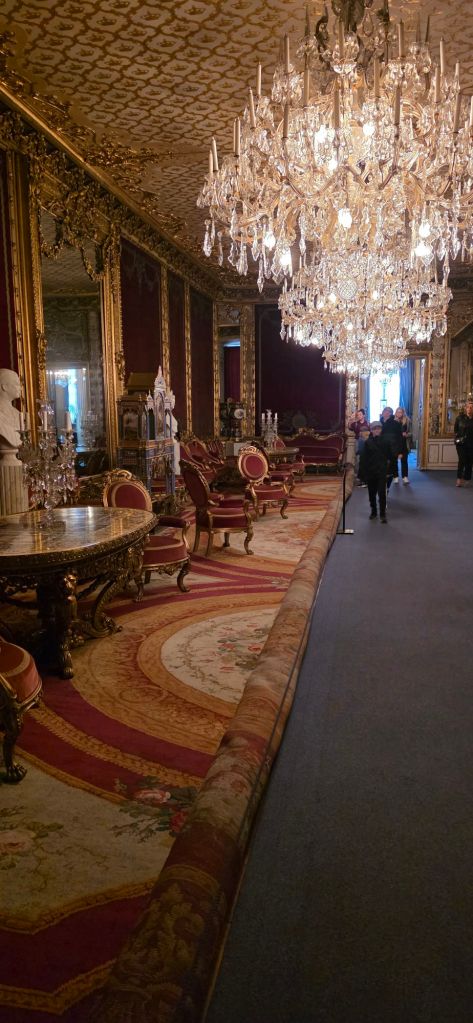
This is the King’s Jubilee Room which was renovated starting in 1998 to celebrate the silver anniversary of the King’s coronation. The furnishings and decorating is a showcase for Swedish design and craftsmanship.
The Victoria Drawing Room held a carpet woven in a single roll (shown here partially rolled up) which was very impressive in its size and detail.
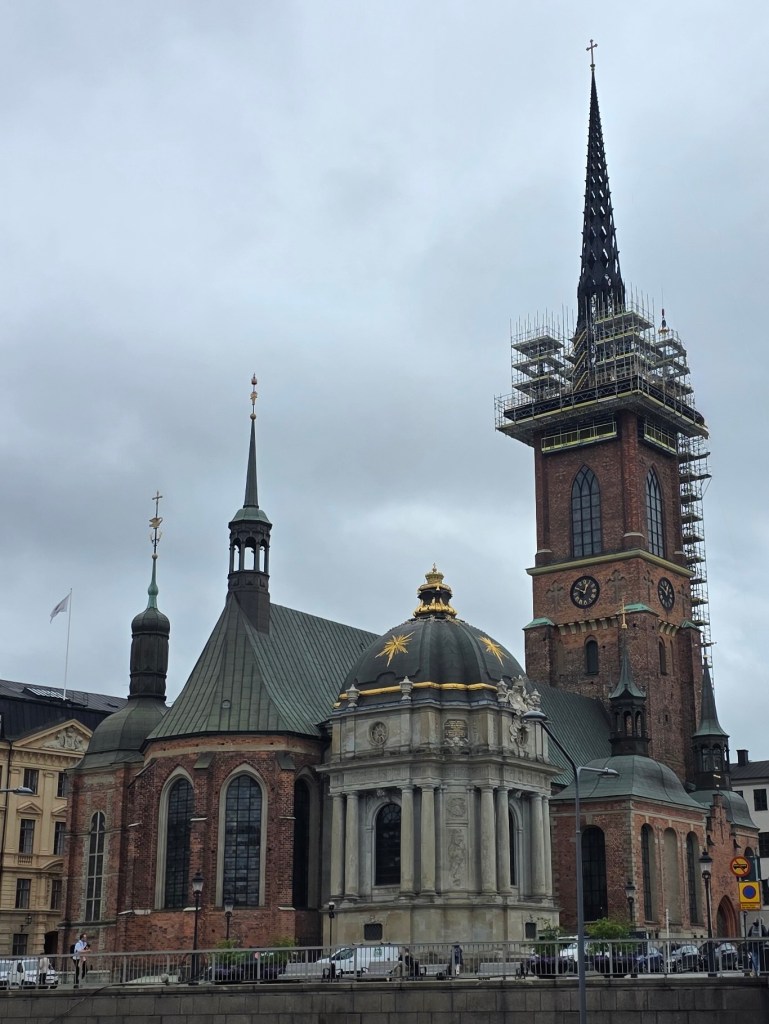
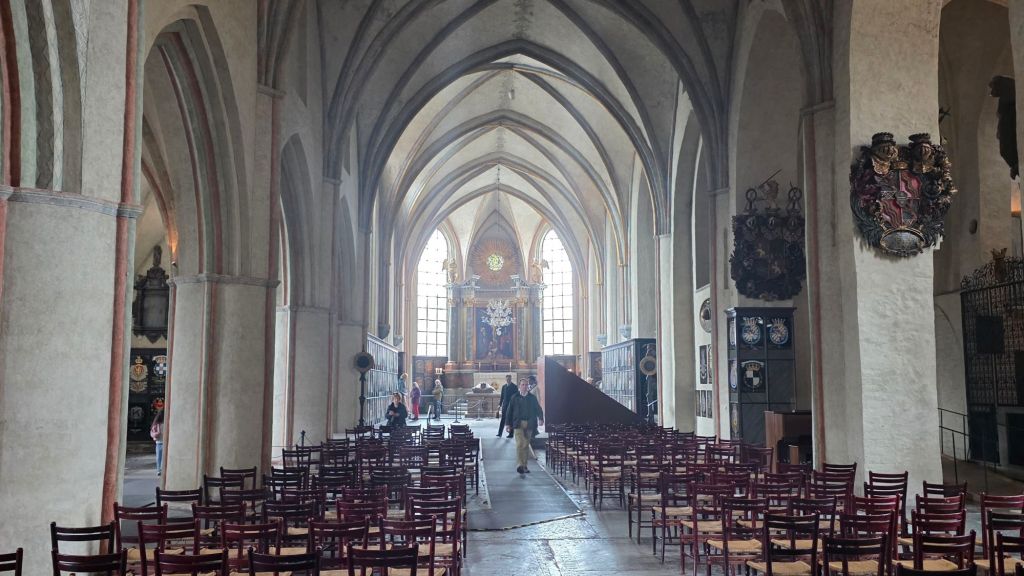
Our second morning Adventure was to the Riddarholmen Church which was completed near the beginning of the 14th century.
It held regular services by the Franciscan monks until 1807. It has been used as the burial church for the Swedish kings. There are about 200 graves here in the floor alone.
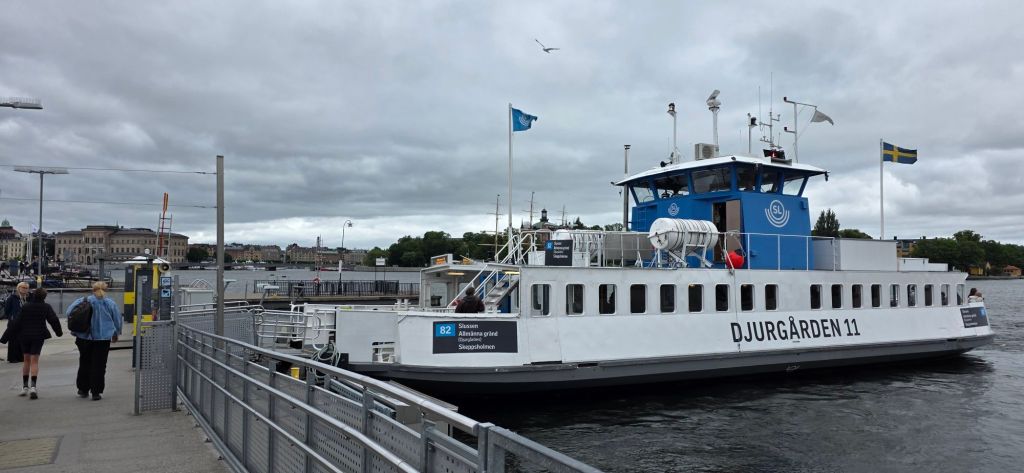
By now, it was time to get all 5 Adventurers together for lunch and the afternoon site visits. We knew that we wanted to leave the old town of Stockholm (Gamla Stan) to visit the Vrak Museum of Wrecks so we boarded the commuter ferry to Djurgården.
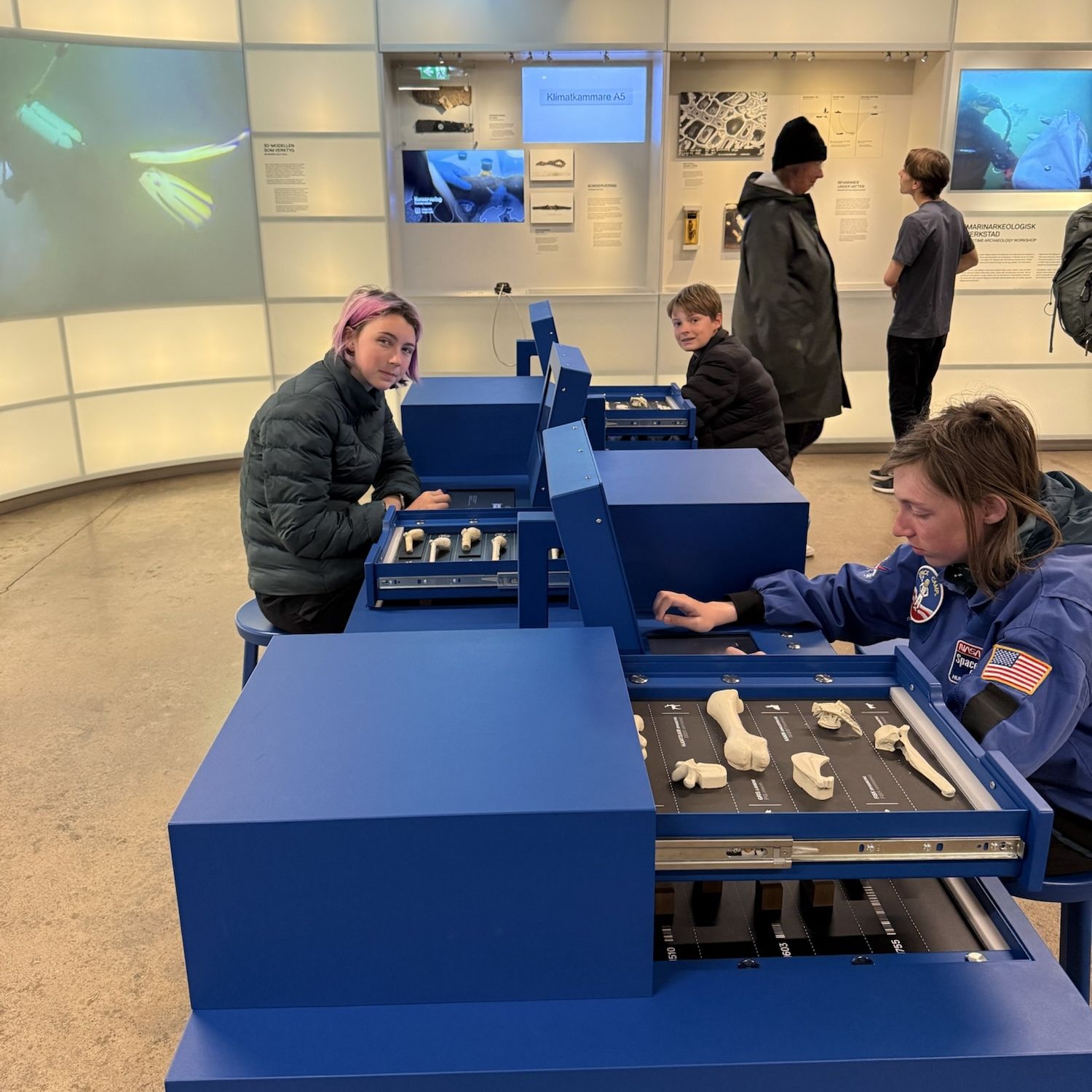
This Museum is dedicated to the study of Baltic shipwrecks and maritime history. There were a number of wonderful exhibits presented in a variety of engaging ways. For example, there was a VR station which allowed us to “dive” on a shipwreck, take photos and collect specimens for further study.
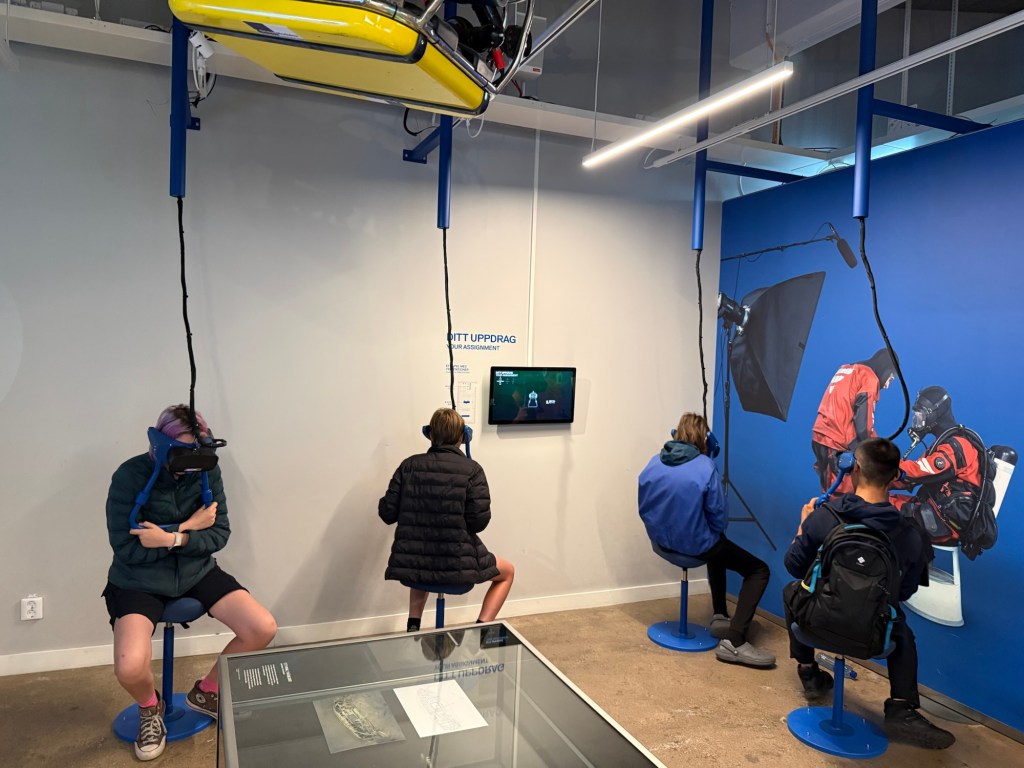
In subsequent rooms, we could use microscopes to assess the age of wood collected on the “dive”. Then we reviews historical documents to piece together the data necessary to identify the wreck.
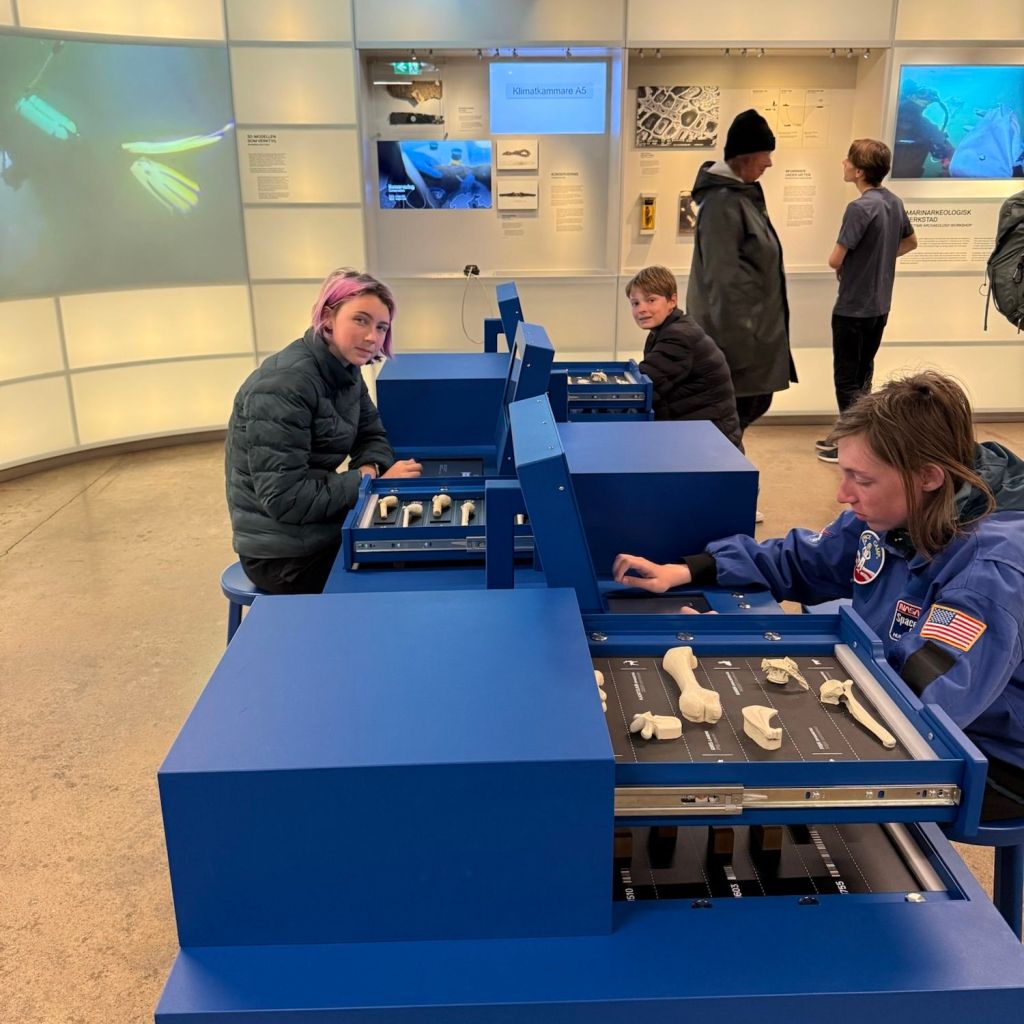
There were four rooms which each explored a specific shipwreck from four different eras. The exhibits explored everything from the ship’s passengers and cargo to the cause of the wreck and subsequent recovery.
The display for the loss of the MS Estonia was particularly moving because it occurred in 1994 and some of us remembered the event which claimed nearly 900 lives. The audio of the ship’s distress calls played in a loop and made the events very real as did video of the cruise ferry during its operations.
We spent more time at this museum than we had expected and this meant that we would come up against closing time at our last stop at the Vasamuseet.
The city of Stockholm is situated on 14 islands in the archipelago of southern Sweden. The Vasamuseet is very special in that it was built entirely around the Vasa, a ship which had sunk in the Stockholm archipelago in 1660.
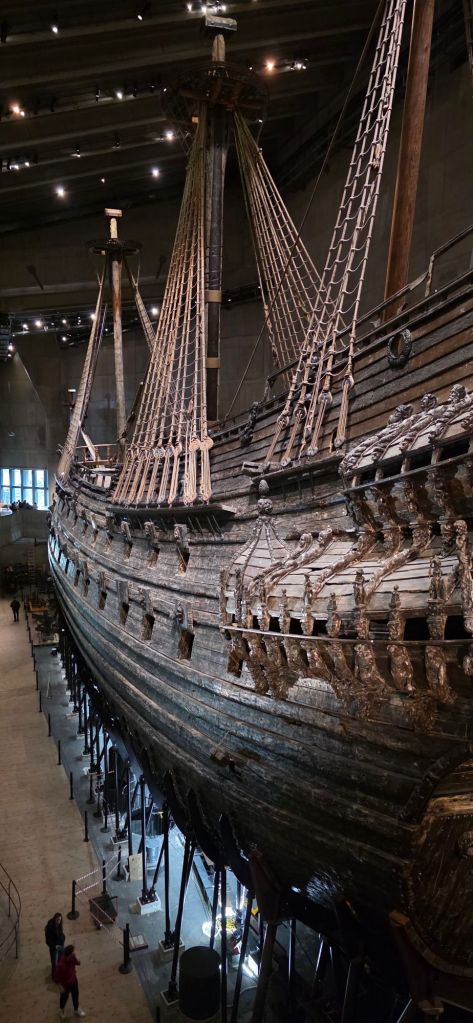
We learned that the Vasa sank 20 minutes into its maiden voyage. Its location was forgotten for hundreds of years until “rediscovered” in the 50’s and then painstakingly restored in the 60’s and 70’s. The Vasamuseet was built in 1988 and is a primary destination for Swedish schoolchildren ever since. The museum architecture is quite compelling and the focus remains on the ship while 7 floors of exhibits and viewing positions surrounds it.
The original ship was quite colorful but is presented here in its unpainted state. 45 million visitors to this museum can tell you that the process to remove the sea water from the oak and replace it with polyethylene glycol took 17+ years and required constant application of moisture to prevent deterioration.
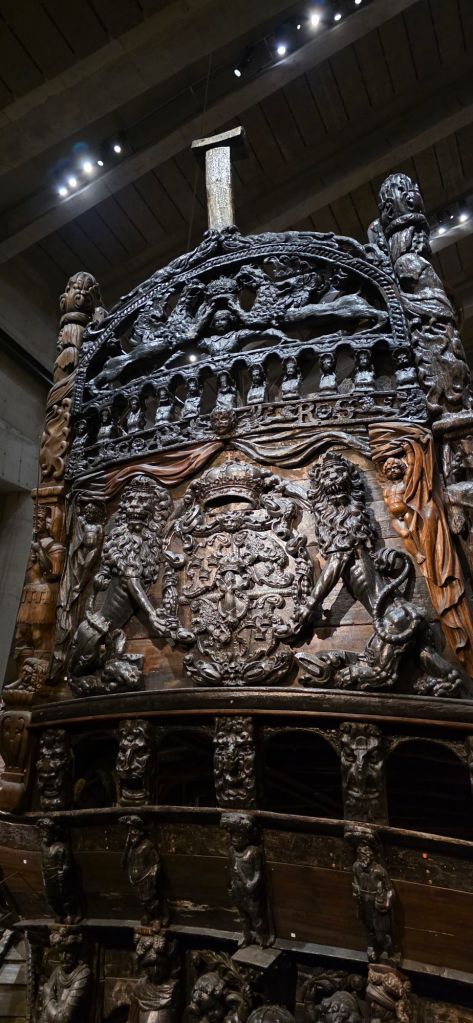
It remains one of the oldest and most complete ships of its age. Astoundingly, 98% of the ship shown here is original.
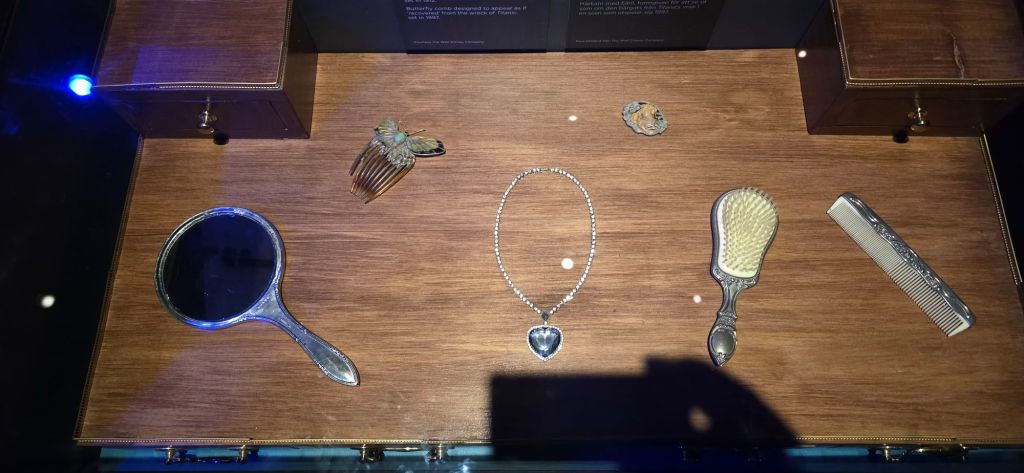
The museum docents kicked us out at closing but we had a chance to spend a few minutes in the traveling James Cameron exhibit. He is, of course, a renowned filmmaker (The Abyss, Titanic, Avatar) but is also an ocean explorer and Adventurist. He has been to the deepest part of the ocean in a World Record dive and shot footage of the Titanic which he used in the film. Recognize any of these props?
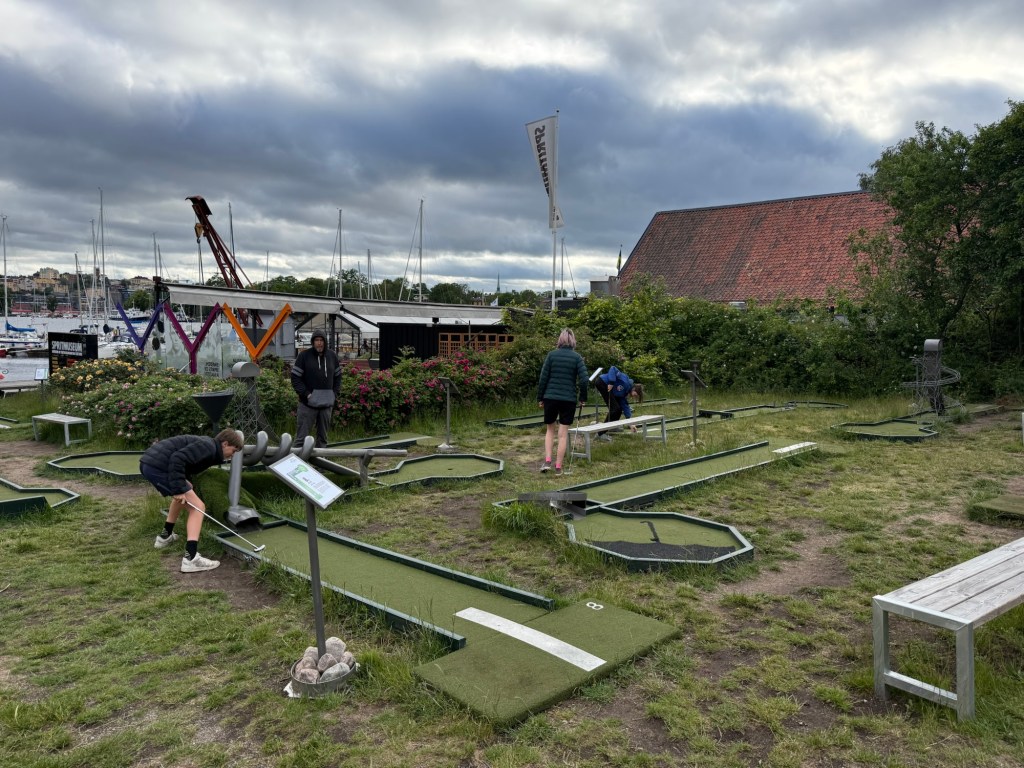
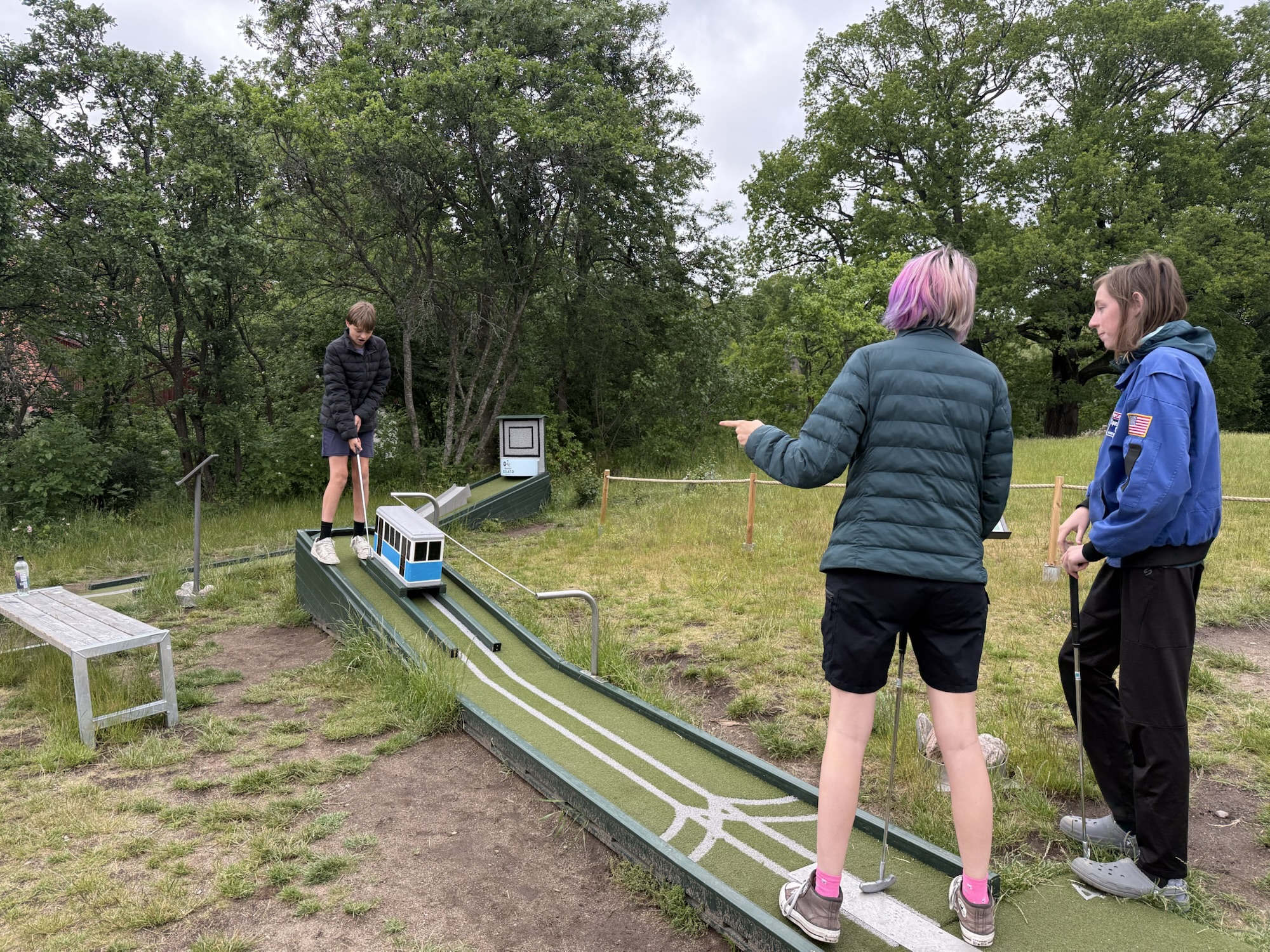
Our day ended with a bit of recreation as the kids found a mini golf course attached to a gelato stand (imagine their luck). This course was weird, even by mini golf standards but we all had fun.